
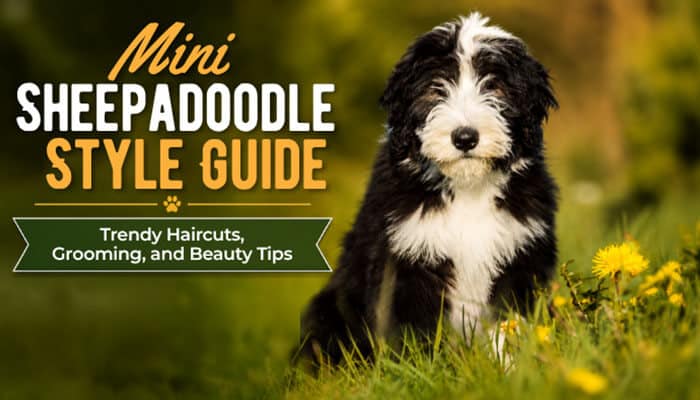

A Mini Sheepadoodle can look like a fluffy teddy bear, a neatly trimmed companion, or a playful pup with soft waves. However, that beautiful coat requires consistent care. Without proper brushing and trimming, hidden tangles can develop close to the skin and become uncomfortable.
Because this dog is commonly bred from an Old English Sheepdog and a Miniature Poodle, its coat is not completely predictable. One puppy may have loose waves, while another may develop dense curls or a straighter, shaggy coat. Size, shedding level, color, and grooming needs can also vary.
This practical style guide explains popular haircuts, coat-care tools, bathing steps, seasonal grooming, and beauty tips for a Mini Sheepadoodle. It will help owners choose a comfortable style that looks attractive without placing fashion ahead of the dog’s health.
What Is a Mini Sheepadoodle?
A Mini Sheepadoodle is a cross between an Old English Sheepdog and a Miniature Poodle, although some breeders may use different generations or breeding combinations. It is not a separately standardized breed, so appearance and adult size may differ significantly between dogs.
The word “mini” should not be treated as a guaranteed size category. Adult weight depends on several factors, including:
- The size of both parents
- The Poodle used in the breeding line
- The puppy’s generation
- Genetics inherited from each parent
- Diet, age, sex, and general health
Prospective owners should ask the breeder for the actual sizes and health records of both parents instead of relying only on labels such as mini, micro, petite, or toy.
Understanding the Mini Sheepadoodle Coat
The coat is usually one of the first things people notice. It may be curly, wavy, shaggy, or somewhere between these textures.
| Coat Type | Common Appearance | Grooming Difficulty | Suggested Routine |
| Curly | Dense curls similar to a Poodle | High | Brush or comb daily |
| Wavy | Soft waves with a teddy-bear look | Moderate to high | Brush at least 4–5 times weekly |
| Shaggy | Longer, looser hair | Moderate | Brush several times weekly |
| Mixed texture | Curly in some areas and straight in others | High | Check problem areas daily |
No coat type is automatically maintenance-free. Even a low-shedding Mini Sheepadoodle can develop painful mats because loose hair may remain trapped inside the coat instead of falling onto the floor.
Veterinary guidance recommends daily brushing for dogs with long, curly, or silky coats, particularly around the ears, armpits, and backs of the legs. These areas experience frequent movement and friction, making them more likely to tangle.
Is a Mini Sheepadoodle Hypoallergenic?
No dog is completely hypoallergenic. Some dogs may release less loose hair into the home, but people can react to allergens found in dog dander, saliva, and urine—not only to fur.
A Mini Sheepadoodle may be easier for some allergy-sensitive households to live with if it inherits a curlier, low-shedding coat. However, this cannot be guaranteed.
Before bringing one home, an allergy-sensitive person should:
- Spend time with the individual dog
- Speak with an allergy specialist
- Avoid trusting “100% hypoallergenic” claims
- Clean bedding and soft furnishings regularly
- Use a suitable air purifier if recommended
- Keep the dog out of the allergic person’s bedroom
Best Mini Sheepadoodle Haircuts
The best haircut should suit the dog’s coat, lifestyle, climate, and tolerance for grooming. A beautiful cut is only successful when the dog remains comfortable.
1. Teddy Bear Cut
The teddy bear cut is one of the most requested styles. The body hair is trimmed to an even, manageable length while the face is softly rounded.
This style usually includes:
- A rounded head
- Neatly shaped cheeks
- Shorter hair around the eyes
- Even body length
- Rounded feet
- A tidy sanitary area
The teddy bear cut gives a Mini Sheepadoodle a soft, youthful appearance. However, the rounded face still requires regular brushing, especially around the ears, chin, and collar.
2. Puppy Cut
A puppy cut keeps the coat at a similar short length across most of the body. Despite its name, adult dogs can wear this style.
It is a practical choice for:
- Active dogs
- Busy households
- Warm seasons
- Dogs that swim regularly
- Owners who prefer easier maintenance
A puppy cut reduces the time needed for brushing, but it does not remove the need for coat care. Friction areas can still become tangled.
3. Lamb Cut
The lamb cut keeps the body relatively short while leaving the legs slightly longer and fuller. It creates a polished, balanced shape inspired by traditional Poodle grooming.
This style can look elegant, but the longer leg hair catches mud, leaves, and moisture easily. Owners should comb the legs after outdoor activity.
4. Shaggy Cut
A shaggy cut keeps the natural, casual appearance that many owners love. The coat remains longer, while the groomer shapes the face, feet, and body to avoid an untidy look.
This cut requires more home care because long hair can hide:
- Small mats
- Fleas or ticks
- Grass seeds
- Skin irritation
- Moisture near the ears
- Dirt between the paw pads
A long-coated Mini Sheepadoodle should be combed down to the skin rather than brushed only across the surface.
5. Summer Cut

A summer cut shortens the coat to make daily maintenance easier during hot or humid weather. The length should be discussed with an experienced groomer because coat structure varies.
A short haircut does not protect a dog from heat on its own. Owners must still provide shade, fresh water, cool indoor space, and exercise during cooler hours.
6. Kennel Cut
The kennel cut is short, simple, and practical. It can be useful for highly active dogs or coats that are difficult to maintain.
This style may be suitable when a Mini Sheepadoodle:
- Spends considerable time outdoors
- Frequently collects burrs or mud
- Dislikes long grooming sessions
- Needs easier coat management
- Has recovered from severe matting
7. Clean-Face Style
A clean-face trim removes or shortens facial hair around the muzzle. It is inspired by Poodle grooming and can help prevent food, water, and dirt from collecting around the mouth.
The appearance is very different from a teddy-bear face, so owners should show the groomer a reference photograph before requesting it.
Mini Sheepadoodle Haircut Comparison
| Haircut | Maintenance Level | Best Feature | Suitable For |
| Teddy bear cut | Moderate | Rounded, cute appearance | Owners wanting a classic doodle style |
| Puppy cut | Low to moderate | Easy daily maintenance | Active dogs and busy families |
| Lamb cut | Moderate to high | Stylish, shaped legs | Owners who enjoy regular brushing |
| Shaggy cut | High | Natural, fluffy appearance | Dogs receiving frequent coat care |
| Summer cut | Low to moderate | Shorter, practical coat | Warm weather and outdoor activities |
| Kennel cut | Low | Simple maintenance | Very active dogs |
| Clean-face style | Moderate | Cleaner muzzle area | Dogs with messy facial hair |
Essential Grooming Tools
A reliable home-grooming kit makes coat care safer and faster. Owners do not need dozens of products, but they do need tools suited to the dog’s coat.
Recommended tools
- Slicker brush: Separates curls and removes loose hair
- Stainless-steel comb: Finds tangles hidden beneath the topcoat
- Detangling spray: Adds slip and reduces pulling
- Blunt-tip grooming scissors: Helps with minor trimming when used carefully
- Dog shampoo: Cleans without using products formulated for human skin
- Dog conditioner: Helps make longer coats easier to comb
- Absorbent towels: Remove excess moisture after bathing
- Pet dryer: Dries the coat more evenly when used at a safe temperature
- Dog nail clippers or grinder: Keeps nails at a comfortable length
- Dog toothbrush and toothpaste: Supports dental care
The metal comb is especially important. A coat may look smooth on top while remaining tightly tangled near the skin.
How to Brush a Mini Sheepadoodle Correctly
Quickly brushing over the surface is not enough for a thick doodle coat. Use the line-brushing method to reach every layer.
Step-by-step brushing method
1. Place the dog on a stable, nonslip surface.
2. Lightly mist the coat with a dog-safe detangling spray.
3. Divide the hair into small sections.
4. Lift one section to reveal a line of skin.
5. Brush gently from the skin toward the end of the hair.
6. Follow with a metal comb.
7. Move to the next small section.
8. Stop if the dog shows pain or serious discomfort.
Pay extra attention to:
- Behind the ears
- Under the collar or harness
- Armpits
- Chest
- Belly
- Backs of the legs
- Base of the tail
- Beard and chin
- Between the toes
For a longer Mini Sheepadoodle coat, daily brushing is the safest routine. A shorter coat may need brushing several times per week, depending on texture and activity.
How Often Does a Mini Sheepadoodle Need Grooming?
The following schedule provides a useful starting point, but it should be adjusted for the individual dog.
| Grooming Task | Suggested Frequency |
| Check for tangles | Daily |
| Full brushing and combing | Daily or at least several times weekly |
| Clean beard after meals | As needed |
| Check eyes and ears | Weekly |
| Bath | About every 4–6 weeks or when dirty |
| Professional haircut | About every 6–8 weeks |
| Nail check | Every 2–4 weeks |
| Toothbrushing | Ideally daily |
| Paw inspection | After walks and outdoor play |
PetMD recommends brushing a Sheepadoodle several times a week—or even daily—along with baths and trims every couple of months. The exact schedule depends on coat texture and lifestyle.
Bathing Without Creating Mats
A tangled coat often becomes tighter after it gets wet. Brush and comb the dog before bathing unless a groomer or veterinarian advises otherwise.
Safe bathing routine
- Remove loose tangles before the bath.
- Use lukewarm water.
- Wet the coat down to the skin.
- Apply dog shampoo in small sections.
- Avoid getting shampoo in the eyes and ears.
- Rinse until no product remains.
- Apply dog conditioner if appropriate.
- Rinse again thoroughly.
- Press the coat with a towel instead of rubbing it.
- Dry the coat completely.
- Brush and comb during or after drying.
Do not use human shampoo. Dogs have different skin needs, and human products may cause dryness or irritation.
Bathing too often may strip natural oils from the skin. The right frequency depends on the dog’s activity, coat, and any medical needs.
Facial Grooming and Tear-Stain Care
Long facial hair can block vision or trap food and moisture. A Mini Sheepadoodle may need regular trimming around the eyes and muzzle.
Use a soft, damp cloth to remove normal debris around the eyes. Never cut close to the eyes while the dog is moving. This area is safer in the hands of a professional groomer.
Contact a veterinarian when eye discharge is:
- Yellow, green, or bloody
- Heavy or recurring
- Present in only one eye
- Accompanied by redness
- Linked with squinting or rubbing
- Producing a strong odor
Tear stains should not simply be covered with cosmetic products. Persistent staining may require an examination to rule out eye irritation, blocked tear drainage, allergies, or other problems.
Ear Care
Floppy, hairy ears may trap heat and moisture. Check the ears weekly, especially after bathing or swimming.
Healthy ears should not have a strong smell, heavy discharge, swelling, or severe redness. Head shaking and repeated scratching can also signal a problem.
Do not insert cotton swabs deep inside the ear canal. Ask a veterinarian which canine ear cleaner is appropriate. Ear-hair plucking should also be discussed with a veterinarian or experienced groomer because not every dog needs it.
The AVMA advises contacting a veterinarian when a pet persistently shakes its head or scratches its ears.
Nail, Paw, and Sanitary Care
Hair between the paw pads can collect dirt and reduce traction on smooth floors. A groomer can carefully trim this hair level with the pads.
Check the paws after walks for:
- Thorns
- Burrs
- Grass seeds
- Small stones
- Cracked pads
- Redness
- Ice or road salt
- Chewing or licking
Nails should be short enough to support a natural stance. When trimming at home, remove only the tip and avoid the quick, which contains blood vessels and nerves. If the nails are dark or the dog will not remain still, ask a groomer or veterinary professional for help.
A sanitary trim keeps hair around the rear and genital areas shorter. This can reduce trapped waste and make daily cleaning easier.
Seasonal Grooming Tips
Spring
Rain, pollen, and mud can collect in a longer coat.
- Wipe the paws after walks.
- Check for ticks and plant material.
- Dry wet hair completely.
- Brush more often during active outdoor days.
Summer
A comfortable summer routine is more important than simply shaving the coat.
- Choose a shorter, manageable haircut.
- Avoid walking on hot pavement.
- Exercise during cooler hours.
- Provide water and shade.
- Check the skin for irritation and parasites.
- Never leave a dog in a parked vehicle.
Autumn
Seeds, burrs, and dry leaves can become trapped in curls.
- Inspect the legs and belly after outdoor play.
- Comb behind the ears and under the harness.
- Remove debris before it becomes tangled.
Winter
A longer coat may provide warmth, but it still needs maintenance.
- Remove snow or ice from the paws.
- Dry the legs and belly after walks.
- Protect paw pads from salt and de-icing chemicals.
- Do not allow a damp coat to remain wet for hours.
What to Tell a Professional Groomer
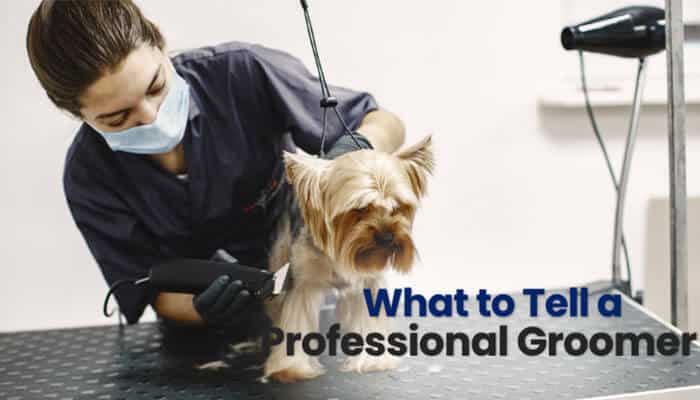
Clear instructions prevent disappointing or unsafe haircuts. Instead of asking only for a “teddy bear cut,” explain the exact result you want.
Tell the groomer:
- The preferred body length
- Whether the face should be round or closely trimmed
- How much hair to leave on the ears and tail
- Whether the dog has sensitive skin
- Where tangles usually form
- Whether the dog fears dryers or nail clipping
- Any medical conditions or allergies
- How much brushing you can realistically do at home
Bring photographs showing the preferred style. The photograph should feature a dog with a similar coat texture because the same haircut can look very different on straight, wavy, and curly coats.
When a Short Shave May Be Necessary
Severe matting cannot always be brushed out safely. Tight mats pull on the skin and may hide sores, bruising, parasites, or infection. Long dematting sessions can also be painful.
A short shave may be the most humane option when:
- Mats sit tightly against the skin
- Large areas of the body are affected
- Brushing causes pain
- The skin cannot be inspected
- Moisture or waste is trapped beneath the coat
Never cut a tight mat with household scissors. The skin can be pulled into the mat, making accidental cuts more likely. Ask a qualified groomer or veterinarian for help.
Once the coat is safely removed, the owner and groomer can create a simpler maintenance plan for the Mini Sheepadoodle.
Common Grooming Mistakes to Avoid
Brushing only the top layer
A fluffy surface does not mean the hair near the skin is free from tangles. Always test the finished area with a comb.
Bathing a matted coat
Water can tighten existing knots. Remove manageable tangles before bathing and seek professional help for severe matting.
Choosing appearance over comfort
Very long ears, beards, and leg furnishings look attractive but collect dirt and moisture. Select a style that matches the time available for maintenance.
Using human beauty products
Human shampoo, perfume, hair dye, essential oils, and skin treatments may not be safe for dogs. Use products developed for pets and approved by a veterinarian when necessary.
Pulling through painful knots
Do not repeatedly drag a brush through a tight mat. Work gently in small sections or ask a professional to remove it safely.
Waiting too long between appointments
A Mini Sheepadoodle may need grooming before the coat looks untidy. Booking appointments in advance helps maintain a consistent schedule.
How to Introduce a Puppy to Grooming
Early, positive practice can make future grooming easier. Begin with very short sessions and reward calm behavior.
A simple training routine can include:
- Touching the paws gently
- Lifting each ear
- Holding the chin for one second
- Brushing a small section
- Turning on a dryer at a distance
- Placing the puppy on a nonslip mat
- Rewarding calm behavior with praise or treats
Do not force a frightened puppy through a long session. End while the puppy is still calm and gradually increase the time.
Coat and Skin Warning Signs
Grooming gives owners a chance to notice changes early. Contact a veterinarian if a Mini Sheepadoodle develops:
- Ongoing itching
- Bald patches
- Red or inflamed skin
- Scabs or open sores
- A strong skin odor
- Sudden coat thinning
- Greasy or unusually dry skin
- Repeated ear problems
- Lumps or swelling
- Persistent paw licking
- Pain when touched
These signs may be connected to allergies, parasites, infection, injury, or another health condition. Grooming can reveal a problem, but it cannot replace veterinary diagnosis.
Mini Sheepadoodle Grooming Checklist
Daily
- Check the coat for tangles.
- Wipe the beard after messy meals.
- Look for debris around the eyes.
- Check the paws after outdoor activity.
Weekly
- Complete a thorough line-brushing session.
- Use a comb to check the skin-level coat.
- Inspect the ears, skin, nails, and paw pads.
- Wash bedding and grooming tools.
Monthly or as needed
- Bathe with dog-safe products.
- Trim or grind the nails.
- Clean the ears with a veterinarian-approved product.
- Check whether the haircut still supports easy maintenance.
Every six to eight weeks
- Schedule professional grooming.
- Review the haircut length.
- Discuss skin, ear, or coat changes.
- Adjust the style for the season and lifestyle.
Final Thoughts
A stylish Mini Sheepadoodle does not need the longest or most complicated haircut. The best look is clean, comfortable, easy to maintain, and suited to the dog’s natural coat.
Daily coat checks, careful brushing, regular professional appointments, clean ears, short nails, and timely veterinary care form the foundation of a healthy grooming routine. When owners choose comfort before appearance, a Mini Sheepadoodle can enjoy a soft, attractive coat without painful mats or stressful grooming sessions.
Mini Sheepadoodle FAQs
1. How often should a Mini Sheepadoodle be brushed?
A long, curly, or dense coat may require daily brushing. A shorter coat may need brushing several times per week. Use a metal comb after brushing to find hidden tangles.
2. What is the best haircut for a Mini Sheepadoodle?
The puppy cut and teddy bear cut are popular because they balance appearance with manageable maintenance. The best choice depends on coat texture, climate, activity level, and the owner’s brushing routine.
3. How often should a Mini Sheepadoodle visit a groomer?
Many benefit from a professional appointment every six to eight weeks. Dogs with faster-growing coats or detailed styles may need more frequent visits.
4. Can I shave my Mini Sheepadoodle in summer?
A groomer can shorten the coat, but owners should avoid an extremely close shave without professional guidance. Coat type varies, and protection from sunlight, heat, and skin irritation must be considered.
5. Why does my dog become matted so quickly?
Dense curls trap loose hair, while moisture and friction tighten tangles. Collars, harnesses, swimming, and missed brushing sessions can make matting develop faster.
6. Can I groom this dog at home?
Owners can handle routine brushing, combing, bathing, dental care, and simple nail maintenance if the dog is cooperative. Haircuts, tight mats, nervous dogs, and work close to the eyes or skin are usually safer for trained professionals.
7. Does a Mini Sheepadoodle shed?
Shedding varies. Some dogs shed very little, while others inherit more shedding from the Old English Sheepdog side. Low shedding does not mean low grooming.
8. When should a puppy have its first professional groom?
Begin gentle handling and brushing as soon as the puppy settles into the home. Ask the veterinarian when it is safe to visit a grooming salon based on the puppy’s vaccination status and local disease risks.
