
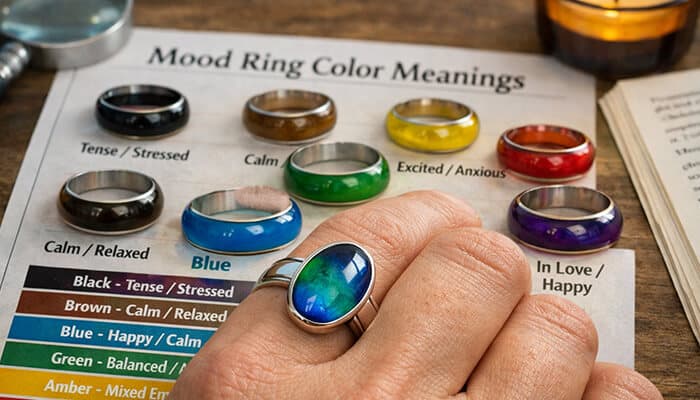

Mood rings have fascinated people for decades, offering a fun and intriguing way to reflect your emotions. The concept behind mood rings is that they change color based on the temperature of your skin, which can vary depending on your emotions. In this article, we’ll explore the mood ring color meanings, including what each color represents, how mood rings work, and answer some commonly asked questions about them.
What Are Mood Rings and How Do They Work?
Mood rings are typically made with a thermochromic liquid crystal that reacts to changes in temperature. When you wear a mood ring, the heat from your skin causes the liquid crystals to change color, providing a visual representation of your emotional state.
Do mood rings actually work?
Yes, mood rings work by reacting to the body’s temperature, which can fluctuate based on various factors, including your emotional state. However, while they reflect changes in body temperature, they don’t provide an accurate representation of your emotions.
Common Mood Ring Color Meanings
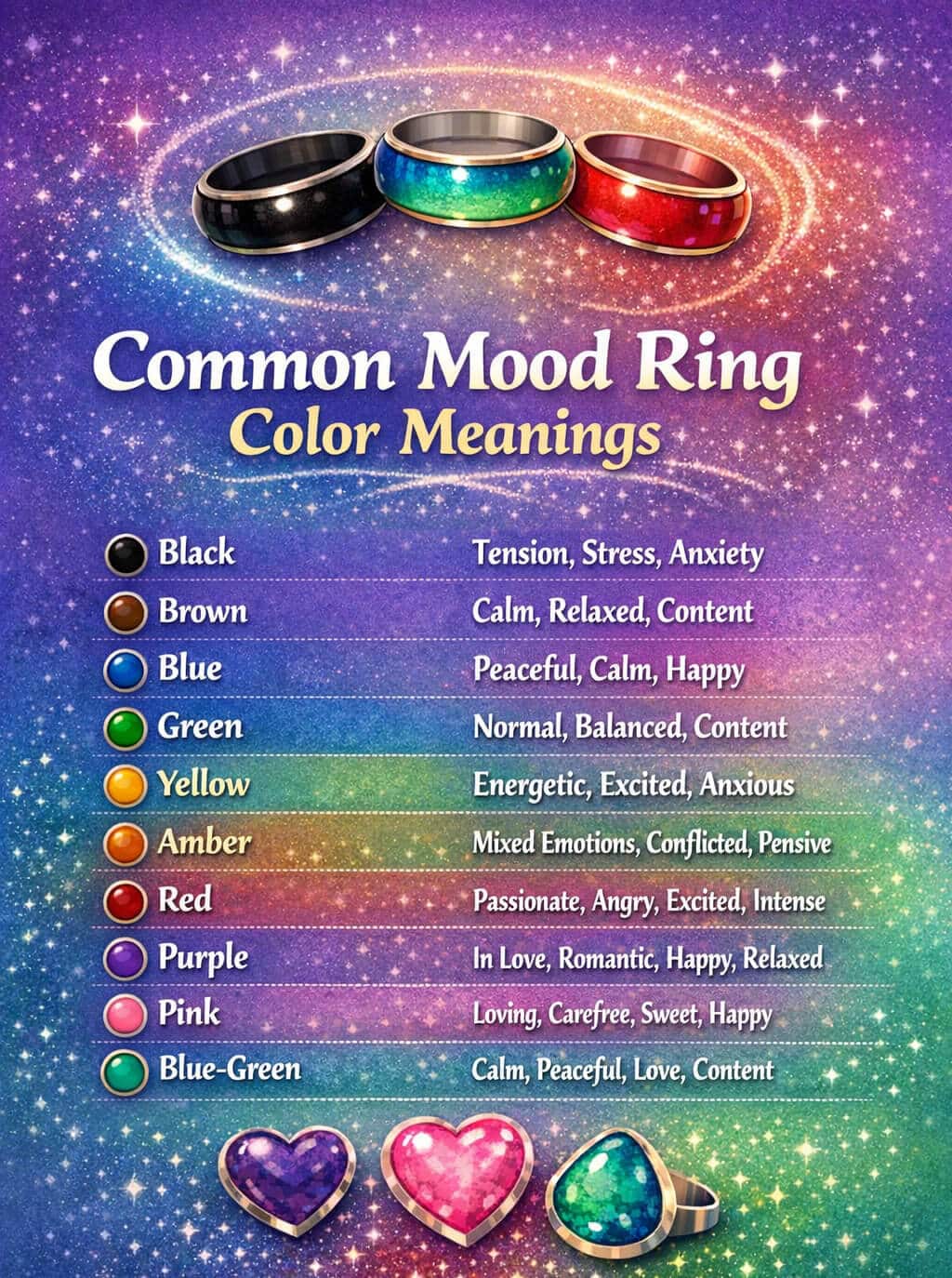
Here’s a breakdown of the most common colors seen on mood rings and their associated emotional meanings:
| Color | Meaning |
|---|---|
| Black | Tension, Stress, Anxiety |
| Brown | Calm, Relaxed, Content |
| Blue | Peaceful, Calm, Happy |
| Green | Normal, Balanced, Content |
| Yellow | Energetic, Excited, Anxious |
| Amber | Mixed emotions, Conflicted, Pensive |
| Red | Passionate, Angry, Excited, Intense |
| Purple | In love, Romantic, Happy, Relaxed |
| Pink | Loving, Carefree, Sweet, Happy |
| Blue-Green | Calm, Peaceful, Love, Content |
Detailed Breakdown of Each Mood Ring Color
1. Black: If the ring turns black, it typically means the wearer is experiencing a lot of stress, tension, or anxiety. This color often appears when someone is in a heightened emotional state.
2. Brown: Brown indicates a calm, relaxed mood. It shows the person is at peace or content.
3. Blue: A blue mood ring generally indicates feelings of calmness, tranquility, and happiness. It is associated with emotional stability and peacefulness.
4. Green: Green suggests that the wearer is in a balanced state, neither overly happy nor sad. It’s a color associated with contentment and peace.
5. Yellow: When the ring turns yellow, it could mean the person is feeling energetic, excited, or even a little anxious.
6. Amber: Amber indicates mixed emotions—perhaps conflicted feelings or a moment of introspection. The wearer could be uncertain or unsure about something.
7. Red: Red is the color of passion and intense emotions. It might indicate anger, excitement, or high energy.
8. Purple: If the mood ring turns purple, it signals love, romantic feelings, or deep affection. It often appears when someone feels emotionally connected or affectionate.
9. Pink: Pink represents feelings of love, kindness, and happiness. A person with a pink mood ring is generally feeling affectionate and happy.
10. Blue-Green: This color indicates deep calmness and peace, often linked to feelings of love and emotional stability.
Factors That Affect Mood Ring Colors
While mood rings are often seen as a fun tool for interpreting emotions, it’s important to note that there are several factors that can influence the color change:
- Temperature: External temperatures (such as air conditioning or heat) can affect the color of the mood ring.
- Physical Activity: Increased blood flow due to physical exercise or stress can change the temperature of your skin, influencing the ring’s color.
- Emotions: Strong emotions such as anger, excitement, or calmness can cause a change in body temperature, thus affecting the mood ring’s color.
Are Mood Rings Evil?
While some may associate mood rings with mystical or supernatural properties, they are purely a novelty item that uses thermochromic technology. There is no inherent danger or negativity in wearing a mood ring, and the idea that they are “evil” is purely a myth or superstition.
Are Mood Rings Still Popular?
Mood rings continue to be popular today because they combine:
- Fashion
- Nostalgia
- Science
- Personal expression
They are especially popular among:
- Teenagers
- Jewelry collectors
- Vintage accessory lovers
Modern mood rings are also available as:
- Necklaces
- Bracelets
- Earrings
- Phone accessories
Conclusion
Mood rings are an interesting blend of science and fun, offering insight into our emotional states through color changes. While they might not be able to accurately measure emotions, they provide an engaging way to reflect on how we’re feeling. Whether you’re wearing one for fun or curiosity, understanding the mood ring color meanings can add a new layer to your experience.
Mood Ring Color Meanings FAQs
1. What is the meaning of black on a mood ring?
Black typically means you are feeling tense or anxious.
2. Are mood rings scientifically accurate?
No, mood rings reflect temperature changes, which can be influenced by emotions but aren’t an accurate measure of them.
3. Can I use mood rings to determine my feelings?
Mood rings can give you an idea of how your emotions may be affecting your body temperature, but they should not be relied upon for emotional self-assessment.
4. Do mood rings work for everyone?
Yes, but individual body temperature fluctuations may cause differences in how mood rings change color.
