
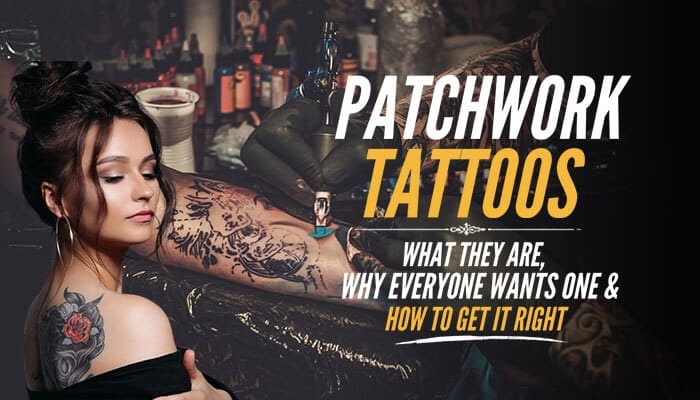
Imagine your arm or leg as a blank canvas, but instead of one big painting, it’s filled with small, individual tattoo pieces, each one its own story, each one slightly spaced apart from the next. That’s the magic of patchwork tattoos. They don’t follow a single theme or connect into one flowing sleeve. They’re more like a scrapbook printed on your skin, bold, personal, and completely one of a kind.
This style has been blowing up on Instagram, TikTok, and Pinterest for good reason. Patchwork tattoos give you total creative freedom. You can add a new piece whenever you want, mix styles like traditional, blackwork, or neo-traditional, and build your collection over months or even years. You don’t need a master plan from day one, that’s exactly what makes patchwork tattoos so exciting.
Whether you’re thinking about your first tattoo or you already have a few and want to turn them into something bigger, this guide will walk you through everything you need to know about patchwork tattoos, from choosing the right placement to finding the perfect artist. Let’s get into it.
The History & Origin of Patchwork Tattoos
Most people think patchwork tattoos are a new Instagram trend. They are not. The idea actually goes back hundreds of years.
Where did the name come from? The word ‘patchwork’ comes from the old art of quilting, sewing together scraps of different fabrics to make one large, beautiful blanket. No two patches were the same, but together they told a story. Tattoo artists borrowed this exact idea.
Roots in Sailor Tattoo Culture
In the early 1900s, sailors would collect small tattoo ‘flash pieces’ at different ports around the world – A rose here, an anchor there, a pin-up from Tokyo. They never planned a full sleeve. They just collected. Each piece was a memory. That random, collected look is the grandfather of the modern patchwork tattoo.
How Patchwork Tattoos Exploded in the 2020s
Social media changed everything. By 2020, the hashtag #patchworktattoo had millions of posts on Instagram. TikTok tattoo content pushed the style to a younger generation who loved the idea of building a collection rather than committing to one big design. Today, patchwork tattoos are one of the fastest-growing tattoo styles in the world.
Why Patchwork Tattoos Are Having a Major Moment
Patchwork tattoos aren’t just a trend, they’re becoming a lifestyle. Here’s why this style resonates so deeply with people right now:
- No commitment to one theme: You can mix a rose, a skull, and a tiny alien on the same arm
- Budget-friendly: You build it piece by piece over time
- Great for cover-ups: Old tattoos can be turned into part of a patchwork collection
- Works for everyone: Minimal or maximalist, dark or delicate, this style bends to your taste
- Celebrities love them: Artists and influencers worldwide are rocking the look
Patchwork Tattoos vs. Traditional Sleeve Tattoos
People often confuse patchwork tattoos with sleeve tattoos. Here’s a simple breakdown:
| Feature | Patchwork Tattoos | Traditional Sleeve |
| Design Flow | Separate, spaced pieces | Connected, flowing design |
| Planning | Build as you go | Full plan from the start |
| Cost | Pay per session | Large upfront commitment |
| Style Mix | Yes, mix freely | Usually, one cohesive style |
| Time to Complete | Months or years | Can be done faster |
| Skin Space | Gaps of bare skin | Fully filled or shaded |
| Best For | Free-spirited collectors | Bold, statement sleeves |
Best Placement for Patchwork Tattoos
Patchwork tattoos look great in many places on the body. But some spots work better than others. Here are the top choices:
Patchwork Sleeve Tattoos (Arms)
The arm is the most popular spot for patchwork tattoos and for good reason. Whether it’s a full sleeve or a half sleeve, the arm gives artists enough room to place multiple pieces with breathing space between them.
- Full sleeve: Wrist to shoulder, packed with individual pieces
- Half sleeve: Elbow to wrist or elbow to shoulder
- Quarter sleeve: Upper arm or forearm only
Patchwork Leg Tattoos
The thigh, shin, and calf are all rising in popularity for patchwork styles. Leg patchwork tattoos have a different visual flow; they can be wide or narrow depending on your body type.
Patchwork Chest & Torso
For a more intimate look, many people are getting patchwork chest tattoos that stretch across the collarbone or down toward the ribs. This placement is dramatic and striking when revealed.
Patchwork Hand & Neck Tattoos
These are bold choices and not for first-timers. But if you’re already heavily tattooed, adding patchwork pieces on your hands or neck creates an effortlessly cool extended collection.
Popular Patchwork Tattoo Styles & Themes
The beauty of patchwork tattoos is that no two collections look alike. That said, here are the most popular style categories people choose from:
1. Traditional Patchwork Tattoos
Bold outlines, limited color palettes, iconic imagery, roses, daggers, anchors, eagles, and pin-up figures. Traditional style patchwork tattoos look clean and age beautifully.
2. Blackwork Patchwork Tattoos
All black ink, geometric shapes, mandalas, and heavy fills. This is perfect for a dark, moody aesthetic. Blackwork patchwork tattoos are striking and easy to add to over time.
3. Neo-Traditional Patchwork Tattoos
A modern spin on the classic style, richer color palettes, more detail, and illustrative shading. Neo-traditional patchwork tattoos look like wearable artwork from a graphic novel.
4. Fine Line Patchwork Tattoos
Delicate, thin lines, floral motifs, and elegant minimalism. Fine line patchwork tattoos are incredibly popular right now, especially for people who prefer subtle tattoo work.
5. Dark & Gothic Patchwork Tattoos
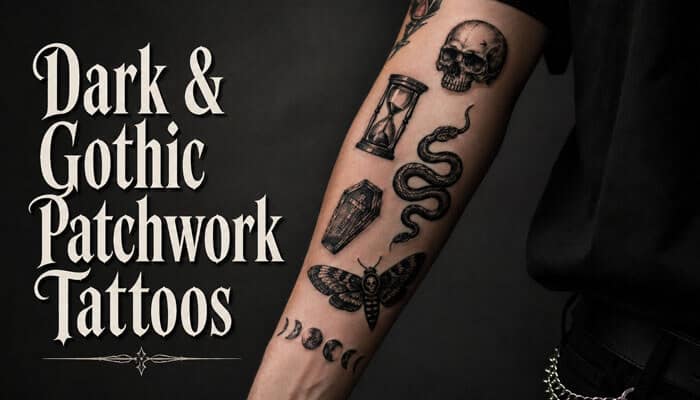
Skulls, hourglasses, snakes, coffins, moths, and moon phases. Dark patchwork tattoos tell moody, mysterious stories across the skin.
6. Dotwork & Stippling Patchwork Tattoos
Instead of solid black fills, dotwork uses thousands of tiny dots to create shading and texture. This style gives patchwork tattoos a unique, hand-crafted texture that looks unlike anything else.
7. Watercolor Patchwork Tattoos
Splashes of color with soft edges and no hard outlines. Watercolor patchwork tattoos are visually stunning but require an artist who specializes in the technique, and they need more frequent touch-ups to maintain their vibrancy.
Patchwork Tattoos for Men vs. Women: Key Differences
While patchwork tattoos work for everyone, there are some popular trends specific to gender expression. Here is a helpful comparison:
| Men’s Patchwork Tattoos | Women’s Patchwork Tattoos | |
| Common Placement | Full arm sleeves, chest, back | Legs, forearms, ribcage, collarbones |
| Popular Motifs | Skulls, daggers, animals, geometric, bold icons | Florals, butterflies, celestial, fine line |
| Preferred Style | Traditional, blackwork, dark/gothic | Fine line, neo-traditional, watercolor |
| Typical Piece Size | Larger anchor pieces (4–8 inches) | Smaller delicate pieces (2–5 inches) |
| Color Palette | Heavy black, grey, bold primaries | Soft tones, pastels, rich jewel colors |
| Gap Philosophy | Tighter spacing, denser collection | More intentional negative space |
Note: These are trends, not rules. Patchwork tattoos are a completely personal mix and match whatever speaks to you, regardless of gender.
Best Placement for Patchwork Tattoos
Patchwork tattoos look great in many places on the body. But some spots work better than others:
1. Arms (Most Popular)
The arm is the number-one spot for patchwork tattoos. The flat, visible surface is perfect for displaying individual pieces.
- Full sleeve: Wrist to shoulder, the classic patchwork canvas
- Half sleeve: Elbow to wrist, or elbow to shoulder
- Quarter sleeve: Upper arm only, or forearm only
2. Legs
The thigh, shin, and calf are rising fast in patchwork tattoo popularity. Leg collections have a different visual flow, wider on the thigh, narrower on the shin, which creates interesting layout challenges and opportunities.
3. Chest & Torso
Patchwork chest tattoos that stretch across the collarbone or down the ribs are dramatic and striking. The sternum is a popular single-piece location that connects to a broader chest patchwork collection. Pain level is higher here, but the visual payoff is massive.
4. Hands & Neck
Bold choices not for first-timers. But if you are already heavily tattooed, adding patchwork pieces here creates an effortlessly cool extended collection.
Note: many employers still have visible tattoo policies, so consider this before inking your hands or neck.
5. Back & Shoulders
The back offers the largest canvas of the body. Patchwork back tattoos are less common but visually stunning, especially when anchor pieces are placed on the shoulder blades with collections spreading outward.
Color vs. Black & Grey Patchwork Tattoos: Which Is Right for You?
One of the biggest decisions in building a patchwork tattoo collection is whether to go color or black and grey. Here is what you need to know:
| Factor | Color Patchwork Tattoos | Black & Grey Patchwork Tattoos |
| Visual Impact | Vibrant, eye-catching, bold | Timeless, moody, sophisticated |
| Aging | Colors fade faster, especially pastels and reds | Ages more gracefully, stays sharp longer |
| Touch-ups | More frequent (every 3–5 years for bright colors) | Less frequent (every 5–10 years) |
| Skin Tone | Best on fair to medium skin tones | Works beautifully on all skin tones |
| Cost | Slightly higher (colored ink costs more) | Standard pricing |
| Style Pairing | Neo-traditional, watercolor, traditional | Blackwork, fine line, realism, dotwork |
| Best For | Bold, expressive collectors | Minimalist or maximalist, both work |
Mixing Color & Black
You CAN mix color and black & grey in the same patchwork collection, many collectors do. The key is to have a plan: put color pieces in certain zones (like the upper arm) and keep black & grey in others (like the forearm) so the overall look feels intentional, not accidental.
Negative Space & Filler Ideas for Patchwork Tattoos
Negative space. The bare skin between your tattoo pieces is one of the most important design elements in patchwork tattoos. But many people also want to fill small gaps without committing to full pieces. Here are smart options:
Tiny Filler Elements That Work:
- Small stars, asterisks, or dots
- Tiny hearts, diamonds, or spades
- Botanical sprigs, leaf clusters, or small ferns
- Swirls, spirals, and small abstract shapes
- Roman numerals or small dates
- Tiny single-needle fine line elements (minimal, subtle)
Should You Fill ALL the Gaps?
No, and this is important. The intentional bare skin between patchwork tattoo pieces is not empty space. It is breathing room. It is what tells the eye, ‘these are separate pieces.’ If you fill every gap, you end up with a traditional sleeve, not a patchwork tattoo. Protect your gaps.
How to Plan Your Patchwork Tattoo Collection
Even though patchwork tattoos are known for being free-form, a little planning goes a long way. Follow these steps:
1. Pick your placement first: Decide which body part you want to fill arm, leg, chest, or back.
2. Choose a loose vibe: You don’t need a strict theme, but knowing if you want dark, colorful, or minimal helps guide each new piece.
3. Leave intentional gaps: The space between pieces is what makes patchwork tattoos unique. Don’t fill every inch at once.
4. Be consistent with sizing: Pieces that are wildly different in scale can look chaotic rather than curated.
5. Work with one or two trusted artists: This keeps your style cohesive even when mixing different themes.
How Many Sessions Does a Patchwork Tattoo Take?
This is one of the most searched questions about patchwork tattoos and most articles skip it entirely. Here is a real answer:
| Collection Size | Number of Pieces | Estimated Sessions | Timeline |
| Starter collection | 3-5 small pieces | 3-5 sessions | 2-6 months |
| Quarter sleeve patchwork | 6-10 pieces | 6-10 sessions | 6-12 months |
| Half sleeve patchwork | 10-16 pieces | 10-16 sessions | 1-2 years |
| Full sleeve patchwork | 16-30+ pieces | 16-30+ sessions | 2-5 years |
| Full body patchwork suit | 50+ pieces | 50+ sessions | 5-10+ years |
Each session for a single small patchwork piece typically takes 1-3 hours. Larger anchor pieces can take 4-6 hours. Most experienced collectors get one new piece every 4-8 weeks, which is also a healthy healing timeline.
How to Find the Right Patchwork Tattoo Artist
Not every tattoo artist specializes in patchwork tattoos. Here’s what to look for when you’re shopping around:
- Check their portfolio: Look specifically for patchwork or collector-style tattoo work
- Look for clean spacing: A good patchwork artist knows how to place pieces so they breathe on the skin
- Ask about style compatibility: If you want fine line, find someone who does fine line patchwork tattoos specifically
- Read reviews: Healing and longevity matter just as much as the initial look
- Book a consultation first: Share your vision before committing to a session
Search on Instagram for hashtags like #patchworktattoo, #collectorsleeeve, or #patchworksleeve to discover talented artists who specialize in this style.
Pain Levels: What to Expect
Pain is always a factor with tattoos. Here’s a quick reference guide for patchwork tattoo placement pain levels:
| Placement | Pain Level | Notes |
| Outer Forearm | Low | Great for beginners |
| Upper Arm | Low | Fleshy and easy |
| Thigh | Medium | Comfortable for most |
| Inner Arm | Medium-High | Sensitive skin area |
| Shin / Calf | Medium-High | Bony, can sting |
| Ribs / Chest | High | Near bone, very sensitive |
| Hands / Neck | Very High | Not for first-timers |
Patchwork Tattoo Aftercare Tips
Once you get your patchwork tattoo, proper aftercare is everything. Here’s what to do:
Right After the Session:
- Keep the bandage or wrap on for the time your artist recommends (usually 2-4 hours)
- Gently wash with unscented antibacterial soap and warm water
- Pat dry, never rub with a clean paper towel
During Healing (Days 1-14):
- Apply a thin layer of fragrance-free tattoo moisturizer 2-3 times a day
- Keep it out of direct sunlight during the healing period
- Do NOT pick at peeling skin, let it fall off naturally
- Avoid swimming, saunas, or soaking in water
Long-Term Care:
- Always apply SPF 50+ sunscreen on healed tattoos when going outside
- Keep skin moisturized daily to maintain ink vibrancy
- Touch-up sessions every few years will keep your patchwork tattoos looking sharp
Common Mistakes to Avoid with Patchwork Tattoos


Learn the key mistakes to avoid when creating a Patchwork Tattoos collection, ensuring a balanced and cohesive design.Even people with tattoo experience make these mistakes when building a patchwork collection. Avoid them:
- Placing pieces too close together: They’ll blur together as they heal and age
- Ignoring the flow of the body: Pieces should follow natural curves, not fight them
- Copying someone else’s collection: Patchwork tattoos are most powerful when they’re personal
- Going too big too fast: Start with a few anchor pieces and grow slowly
- Skipping the consultation: Always show reference images and communicate your vision clearly
How Long Do Patchwork Tattoos Last? Longevity Guide
A properly done and well-cared-for patchwork tattoo can last a lifetime. But ‘last’ does not mean ‘never changes.’ Here is what to expect by style:
| Style | How It Ages | Touch-Up Frequency |
| Traditional/Blackwork | Ages very well, bold lines hold shape | Every 7-10 years |
| Neo-Traditional | Good aging, rich colors fade gradually | Every 5-7 years |
| Fine Line | Lines can thin and spread over time | Every 2-4 years |
| Watercolor | Colors fade and blend fastest | Every 2-3 years |
| Dotwork | Dots can blur slightly with age | Every 5-8 years |
| Geometric Blackwork | Excellent aging, clean shapes hold well | Every 7-10 years |
Sun exposure is the biggest enemy of tattoo longevity. A patchwork tattoo on a sun-exposed arm that is never protected with SPF will look noticeably faded within 5 years. The same tattoo, protected daily with SPF 50+, will look vibrant for 10-15 years or more.
Patchwork Tattoos for Different Skin Tones
Patchwork tattoos can look stunning on all skin tones, but here are some style tips depending on your complexion:
| Skin Tone | What Works Best | What to Discuss with Artist |
| Fair/Light | Most styles work well, bold color pops | Fine lines may fade faster |
| Medium/Olive | Rich colors and blackwork both shine | Yellows and whites may need extra passes |
| Dark/Deep | Bold blackwork, heavy shading, warm tones | Avoid pastels; focus on contrast |
Cost of Patchwork Tattoos: What to Budget
Patchwork tattoos are actually more budget-friendly than a traditional sleeve because you’re paying for one small piece at a time. Here’s a general pricing guide:
- Tiny flash piece (2–3 inches): $80-$200
- Small detailed piece (3–5 inches): $150-$400
- Medium statement piece (5–8 inches): $300-$700
- Full patchwork sleeve (all pieces combined): $1,500-$5,000+ over time
Prices vary based on artist’s experience, your location, and the complexity of each design. Always tip your tattoo artist 15–20% is standard.
Final Thoughts: Is a Patchwork Tattoo Right for You?
If you love the idea of a tattoo collection that grows with you, one that has no rigid rules, no single theme, and no pressure to plan everything out at once, then patchwork tattoos are absolutely the right choice.
They’re not just a style. They’re a philosophy. Each piece you add is a chapter in your story. Each gap of bare skin is room for what comes next. And the beauty of it all is that you get to decide piece by piece, session by session, what your story looks like.
So whether you want a patchwork sleeve tattoo, a few scattered pieces on your legs, or a bold chest collection, start with what feels right and let the rest come naturally. That’s the patchwork way.
Patchwork Tattoos FAQs
1. Do patchwork tattoos have to match?
No, and that’s the point. Patchwork tattoos are designed to be a mix of different styles, sizes, and themes. The contrast between pieces is what gives the style its charm.
2. Can I turn existing tattoos into a patchwork collection?
Absolutely. Many people start with a few random tattoos and connect the dots by adding new pieces around them. This is actually one of the most common ways patchwork tattoo sleeves are born.
3. How long does a full patchwork sleeve take?
It depends on how often you add new pieces, but most full patchwork sleeves take 1–4 years to build. Some collectors take even longer and love the journey.
4. Are patchwork tattoos good for first-timers?
Yes! A small patchwork piece is actually a great first tattoo. Start with one meaningful piece and see how you feel. Many people who get one patchwork tattoo end up wanting a full sleeve within a year.
5. Do patchwork tattoos age well?
When done correctly with proper spacing and quality ink, patchwork tattoos age very well. The gaps between pieces prevent blowout and blurring over time, which is one of the reasons this style is so popular.
