
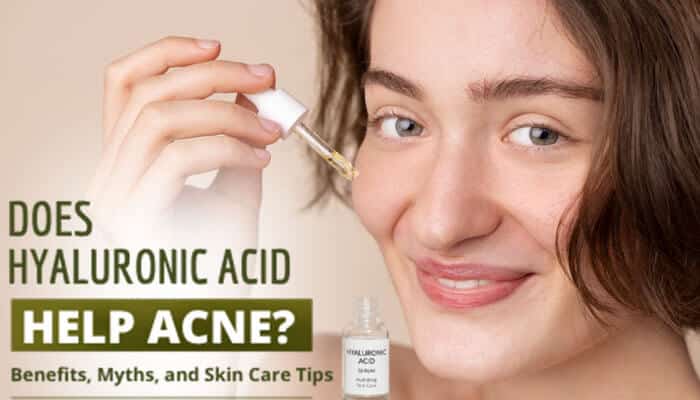

If you have ever stood in the skincare aisle staring at a hyaluronic acid serum and wondered, Does hyaluronic acid help acne, or is this just another overpriced bottle of hype? You are not alone. Thousands of people with acne-prone skin ask this exact question every single day. And honestly, the answer is more interesting than a simple yes or no.
Hyaluronic acid has become one of the most talked-about skincare ingredients in the last decade. You will find it in serums, moisturizers, toners, and even face washes. But most of the buzz is around anti-aging. So when it comes to acne, does hyaluronic acid help acne the way it helps wrinkles? Does it dry out pimples, clog your pores, or do something completely different? If you have been confused by the mixed messages online, this guide is going to clear everything up for you.
Yes, hyaluronic acid can genuinely support acne-prone skin, but not quite in the way most people think. It is not a spot treatment. It will not kill acne-causing bacteria. But the way it works with your skin barrier, oil balance, and inflammation makes it a surprisingly smart addition to any acne care routine. Read on, and we will break down exactly how, when, and why to use it, along with what the science actually says.
What Is Hyaluronic Acid, Exactly?
Let’s start with the basics, because the name “acid” can be misleading. When most people hear “acid” in skincare, they think of exfoliators like salicylic acid or glycolic acid, things that peel away dead skin. But hyaluronic acid (HA) works completely differently.
Hyaluronic acid is a naturally occurring sugar molecule that your body already makes. It lives in your skin, your joints, and your eyes. Its main job? Holding onto water. In fact, one single molecule of hyaluronic acid can hold up to 1,000 times its weight in water. Think of it like a sponge that keeps your skin plump, soft, and cushioned.
The problem is that starting in your mid-twenties, your body makes less and less hyaluronic acid. By age 50, levels can drop by nearly half. This is one reason skin becomes drier, thinner, and more prone to irritation as we age. Topical hyaluronic acid products are designed to replace what your skin loses, and that matters a lot when it comes to acne.
Does Hyaluronic Acid Help Acne?
So here is the big question everyone searches for: Does hyaluronic acid help acne? Let’s be clear about what the science actually says.
Hyaluronic acid is not a traditional acne treatment. It does not kill the bacteria that cause pimples (Cutibacterium acnes), it does not unclog pores the way salicylic acid does, and it does not reduce oil production the way prescription retinoids can. But that does not mean it has nothing to offer.
“Hyaluronic acid won’t cure acne on its own but used correctly, it removes several triggers that make acne worse and helps your skin tolerate the treatments that actually work.”
Here is how hyaluronic acid does help acne indirectly:
- It fixes the dehydration-oil cycle: When your skin is dry and stripped, it overproduces oil (sebum) to compensate. That extra oil is a major acne trigger. By keeping skin properly hydrated, hyaluronic acid can help stabilize oil production.
- It has anti-inflammatory properties: Research shows that certain molecular weights of hyaluronic acid can reduce inflammatory signals in the skin directly relevant to inflamed acne.
- It supports acne treatment tolerability: Retinoids, benzoyl peroxide, and salicylic acid all cause dryness and irritation. Hyaluronic acid counteracts these side effects so you can stick to your acne treatment long-term.
- A 2017 laboratory study found that hyaluronic acid can decrease abnormal oil gland (sebaceous gland) growth and reduce sebum formation, which is exciting, though we still need larger human clinical trials to confirm this effect in real life.
Does hyaluronic acid help acne? Yes, as a supporting player, not a star. It hydrates, calms, reduces oil-related triggers, and helps your real acne treatments work better. That makes it genuinely valuable for anyone dealing with breakouts.
How Acne Forms and Why Moisture Is Part of the Story
To understand why hyaluronic acid matters for acne, you need to understand how pimples actually form. Most people think acne is just about dirty skin or eating too much chocolate, but the real story goes deeper.
Acne starts inside the hair follicle. Each pore on your skin connects to a hair follicle and a tiny oil gland (called a sebaceous gland). Under normal conditions, a small amount of oil travels up the follicle and onto the skin surface, keeping your skin moisturized naturally. But when things go wrong due to hormones, stress, genetics, or a disrupted skin barrier, several problems happen at once:
1. Dead skin cells build up and block the follicle opening
2. The oil gland produces too much sebum, and the quality of that sebum changes
3. Acne-causing bacteria (Cutibacterium acnes) multiply rapidly in the clogged pore
4. The follicle wall becomes inflamed, creating a red, swollen pimple
Now, here is where does hyaluronic acid help acne becomes a real question: skin that is dehydrated and has a compromised moisture barrier is significantly more prone to this entire cascade. When your skin barrier is weak, irritants get in more easily, inflammation is harder to control, and your oil glands tend to overcompensate for the dryness. Hyaluronic acid helps restore the skin barrier, cutting off one of the key pathways that leads to breakouts.
5 Key Benefits of Hyaluronic Acid for Acne-Prone Skin
Now let’s get specific. Here are the five most evidence-supported ways that hyaluronic acid helps people with acne:
1. Deep Skin Hydration Without Clogging Pores
Hyaluronic acid is non-comedogenic, meaning it does not clog pores. This is huge for acne-prone skin, where heavy creams and oils can trigger more breakouts. Hyaluronic acid delivers intense moisture in a lightweight, water-based form that sinks in without leaving a greasy residue. You get all the hydration benefits without the acne risk of heavier moisturizers.
2. Reduces Skin Inflammation
Acne is fundamentally an inflammatory condition. Research published in the Journal of Dermatological Science showed that hyaluronic acid particularly low-molecular-weight forms, can reduce inflammatory substances called calprotectin in skin cells. Less inflammation means less redness, swelling, and pain around active pimples. This is one of the strongest reasons why does hyaluronic acid help acne holds up scientifically.
3. Stabilizes Oil (Sebum) Production
This is the most surprising benefit. A study published in the Journal of Investigative Dermatology found that hyaluronic acid can inhibit the growth of sebaceous gland cells and decrease lipid (oil) synthesis. In other words, it may directly reduce how much oil your skin makes. Since excess oil is a primary driver of acne, this is genuinely exciting, even if more human clinical trials are still needed.
4. Enhances the Effectiveness of Acne Medications
Dermatologists often recommend adding hyaluronic acid to your routine when you are using strong acne treatments. Retinoids like tretinoin or adapalene, as well as benzoyl peroxide, are famous for causing dryness, peeling, and irritation, especially in the first few months. Many people quit these treatments because of the side effects. Hyaluronic acid significantly reduces that dryness and irritation, making it easier to stick with your acne treatment long enough to see real results.
5. Supports Skin Healing After Breakouts
Hyaluronic acid plays a key role in wound healing. It supports immune cell function in skin repair, reduces inflammatory markers, and stimulates collagen and elastin production. After a pimple bursts or is treated, this wound-healing support can help your skin recover faster and reduce the risk of post-inflammatory hyperpigmentation (the dark spots acne leaves behind).
Common Myths About Hyaluronic Acid and Acne Busted
There is a lot of bad information about hyaluronic acid online. Let’s clear up the most common myths, because believing them might be stopping you from getting clearer skin.
Myth 1: Hyaluronic acid is only for dry or aging skin oily skin doesn’t need it.
Fact: Oily skin can absolutely be dehydrated. Lack of water (dehydration) and excess oil are separate issues. Hyaluronic acid provides water-based hydration without adding any oil perfect for oily, acne-prone skin.
Myth 2: Hyaluronic acid will cure my acne on its own.
Fact: No single ingredient cures acne. Hyaluronic acid is best used as part of a complete routine alongside proven acne treatments like retinoids, salicylic acid, or benzoyl peroxide. It supports, but does not replace, those treatments.
Myth 3: Hyaluronic acid causes breakouts.
Fact: Pure hyaluronic acid is non-comedogenic and does not cause acne. If you break out after using an HA product, it is almost certainly another ingredient in that formula like lanolin, coconut oil, or certain emulsifiers. Check the full ingredient list.
Myth 4: Using hyaluronic acid in dry climates pulls moisture out of your skin.
Fact: This concern is partially valid. In very dry environments, hyaluronic acid can draw moisture from deeper skin layers if there is no moisture in the air. The fix: always follow with a light moisturizer to seal the hydration in.
Myth 5: You can’t mix hyaluronic acid with other acne ingredients.
Fact: Hyaluronic acid is one of the safest, most compatible skincare ingredients available. It pairs well with virtually everything: Retinoids, vitamin C, niacinamide, AHAs, BHAs, and benzoyl peroxide. It often makes those ingredients more tolerable.
How to Use Hyaluronic Acid the Right Way for Acne
Using hyaluronic acid correctly makes a real difference. Many people don’t get the full benefit because of simple application mistakes. Here is a step-by-step routine built specifically for acne-prone skin:
1. Cleanse with a gentle, non-stripping face wash
Use a sulfate-free, soap-free cleanser twice daily. Harsh cleansers strip your skin of natural moisture and worsen the dehydration-oil cycle that fuels acne. Pat (don’t rub) your face dry.
2. Apply hyaluronic acid serum to slightly damp skin
This is the most important tip: apply your HA serum while your face is still a little damp, right after cleansing. Hyaluronic acid needs moisture to attract. If your skin is bone dry, it has nowhere to pull from.
3. Apply your acne treatment (if applicable)
If you use a topical treatment like tretinoin, adapalene, benzoyl peroxide, or salicylic acid, apply it after the HA serum. The hyaluronic acid creates a more hydrated base, which can reduce the irritation these actives cause.
4. Follow with a lightweight, non-comedogenic moisturizer
Lock the hyaluronic acid in with a water-based or gel-type moisturizer. This is especially important in dry climates. Skipping this step can actually cause hyaluronic acid to draw moisture from your deeper skin layers.
5. Apply SPF 30+ sunscreen in the morning
UV exposure worsens inflammation and can make acne scars and dark spots much darker. Sunscreen is non-negotiable in any acne routine. Choose an oil-free, non-comedogenic SPF formula.
Apply skincare products from thinnest to thickest consistency. Hyaluronic acid serums are typically thin and watery, so they go on early, right after cleansing and any water-based toners. Thicker creams and SPF go on last.
Hyaluronic Acid vs Other Acne Ingredients Full Comparison
A lot of people wonder how hyaluronic acid stacks up against the other popular skincare ingredients for acne. This table gives you a clear, honest breakdown:
| Ingredient | Primary Role | Treats Active Acne? | Clogs Pores? | Best Used With |
| Hyaluronic Acid | Deep hydration, barrier repair, anti-inflammatory support | Indirectly (prevents triggers) | No non-comedogenic | Everything retinoids, BPO, AHAs, BHAs |
| Salicylic Acid (BHA) | Exfoliates inside pores, clears blackheads & whiteheads | Yes directly | No | Hyaluronic acid (for hydration balance) |
| Benzoyl Peroxide | Kills acne-causing bacteria, reduces inflammation | Yes directly | No (but dries skin) | Hyaluronic acid (to offset dryness) |
| Retinoids (Tretinoin, Adapalene) | Normalizes skin cell turnover, unclogs pores | Yes very effectively | No | Hyaluronic acid (essential for tolerability) |
| Niacinamide | Controls oil, reduces inflammation, fades dark spots | Indirectly | No | Hyaluronic acid, retinoids |
| Azelaic Acid | Antibacterial, anti-inflammatory, fades post-acne marks | Yes gently | No | Hyaluronic acid, niacinamide |
| Glycolic Acid (AHA) | Surface exfoliation, brightening, texture improvement | Partially | No (but can irritate) | Hyaluronic acid (to calm irritation) |
As you can see in this table, hyaluronic acid is the only ingredient that pairs well with every single other acne treatment. Its role as a hydrating, soothing base layer makes it uniquely valuable not because it fights acne directly, but because it makes every other treatment more effective and comfortable to use.
What to Look for in a Hyaluronic Acid Product for Acne-Prone Skin
Not all hyaluronic acid products are the same. When you are shopping for an HA product and you have acne-prone skin, here are the key things to check:
Look for Multiple Molecular Weights
Hyaluronic acid comes in different molecule sizes. Larger molecules sit on the skin’s surface and hydrate the outer layer. Smaller (low-molecular-weight) molecules can penetrate deeper into the skin. For acne, low-molecular-weight HA is especially beneficial because it is the form that has shown anti-inflammatory effects in research. The best serums contain a blend of both.
Avoid Pore-Clogging Added Ingredients
A hyaluronic acid serum itself won’t cause acne, but some HA products are blended with oils, butters, or silicones that can clog pores. Steer clear of formulas containing:
- Coconut oil or palm oil
- Lanolin
- Isopropyl myristate or isopropyl palmitate
- Heavy silicones (like dimethicone in heavy concentrations)
- Cocoa butter or shea butter (in a main serum)
Choose Oil-Free, Water-Based Formulas
For acne-prone and oily skin, gel serums and water-based formulas are your best friends. These feel lightweight, absorb quickly, and do not leave any greasy residue. Look for terms like “gel serum,” “water-gel,” or “oil-free formula” on the packaging.
Look for Complementary Ingredients
Some HA serums include skin-friendly extras that are particularly helpful for acne-prone skin:
- Niacinamide: Controls oil, reduces redness, and pore appearance
- Centella asiatica (Cica): Calms inflammation, promotes healing
- Panthenol (Vitamin B5): Soothes and repairs the skin barrier
- Aloe vera: Cooling, anti-inflammatory, gentle on sensitive skin
- Green tea extract: antioxidant, anti-inflammatory properties
Does Hyaluronic Acid Help Acne Scars?
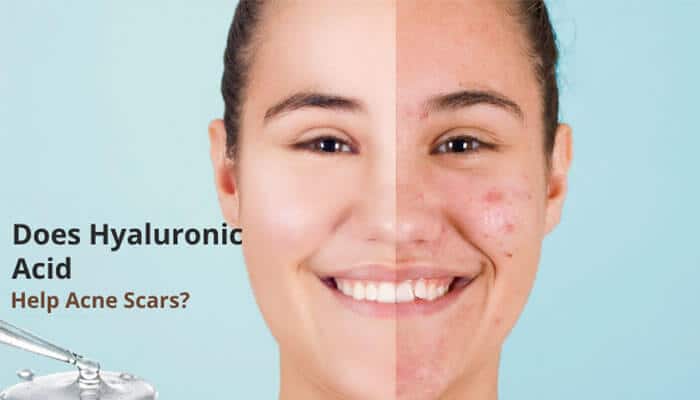
This is one of the most searched questions related to does hyaluronic acid helps acne, and the answer here is genuinely impressive. Hyaluronic acid has been clinically proven to help with certain types of acne scars, particularly when combined with dermatological procedures.
Injected Hyaluronic Acid (Dermal Fillers) for Acne Scars
Dermal fillers made from hyaluronic acid brands like Juvederm and Restylane are used by dermatologists to treat atrophic acne scars (the depressed, pitted type). When injected directly into the scar tissue, hyaluronic acid physically lifts the indentation from below and stimulates collagen production in the surrounding tissue. Studies report significant improvement in scar appearance after 2–3 sessions every four weeks.
Topical Hyaluronic Acid After Laser Treatment
Clinical studies have shown that applying hyaluronic acid serum after fractional CO2 laser resurfacing (a common acne scar treatment) speeds up healing and reduces the risk of post-inflammatory hyperpigmentation especially important for people with darker skin tones, who are at higher risk of discoloration after laser procedures.
Hyaluronic Acid During Microneedling
Some dermatologists apply hyaluronic acid topically during microneedling sessions for acne scars. The tiny channels created by microneedling allow deeper penetration of the HA, enhancing collagen stimulation and improving overall scar texture. Research comparing microneedling alone vs. microneedling with HA showed superior results with the combined approach.
Science Summary
For active acne prevention, topical HA serums are your best bet. For acne scar treatment, injected HA fillers and HA-assisted laser/microneedling procedures offer the most clinically supported results. Talk to a board-certified dermatologist to know which approach is right for your scar type.
Can Hyaluronic Acid Cause Acne or Make It Worse?
Let’s address this concern directly. Pure hyaluronic acid does not cause acne and does not make existing acne worse. It is non-comedogenic, meaning it has been tested and confirmed not to clog pores. It is also considered one of the safest skincare ingredients in cosmetic formulation, extensively reviewed for safety by organizations like the Cosmetic Ingredient Review.
However, there are a few situations where you might experience breakouts after starting an HA product:
- Other ingredients in the formula: The most common culprit. Many HA serums contain oils, emulsifiers, or preservatives that can trigger acne in sensitive skin. Always check the full ingredient list, not just the hero ingredient.
- Applying with dirty hands: Touching your face with unwashed hands while applying any product can introduce bacteria and cause breakouts.
- Purging vs. breakout: If you recently added retinoids or AHAs to your routine at the same time as HA, the “purging” (temporary worsening) is from the active ingredient, not the HA.
- Not sealing with moisturizer in dry environments: As mentioned earlier, in very dry climates, HA without a follow-up moisturizer can draw moisture from deeper layers and slightly stress the skin barrier.
When to See a Dermatologist
If you have been dealing with persistent acne for more than 8–12 weeks despite a good skincare routine, or if your acne is severe, painful, or leaving scars, it is time to see a board-certified dermatologist. Hyaluronic acid is a valuable part of your routine, but professional-grade treatments (prescription retinoids, antibiotics, hormonal treatments, or in-office procedures) are often needed for real, lasting results.
Hyaluronic Acid for Different Acne Skin Types
One of the best things about hyaluronic acid is that it works for virtually every skin type. But how you use it may vary slightly:
| Skin Type | How HA Helps Acne | Best HA Product Format | Special Tips |
| Oily & Acne-Prone | Stabilizes oil production, hydrates without adding grease | Lightweight water-based gel serum | Use a mattifying, oil-free moisturizer on top |
| Combination (Oily T-zone) | Balances moisture across dry and oily zones | Serum applied all over, follow with gel moisturizer | Great for balancing uneven skin texture |
| Dry & Acne-Prone | Replenishes lost moisture, prevents irritation-triggered breakouts | HA serum + richer moisturizer on top | Seal with a slightly heavier, still non-comedogenic cream |
| Sensitive & Acne-Prone | Calms inflammation, soothes redness, repairs barrier | Fragrance-free, minimal-ingredient HA serum | Patch test first; look for soothing extras like centella |
| Hormonal Acne | Supports skin barrier during hormonal fluctuations | Any lightweight HA serum | Pairs especially well with niacinamide for oil control |
Does Hyaluronic Acid Help Acne FAQs
1. Does hyaluronic acid help acne directly, or only indirectly?
Mostly indirectly. It does not kill acne bacteria or unclog pores, but it supports acne-prone skin by calming inflammation, repairing the barrier, and reducing treatment irritation.
2. Can I use hyaluronic acid on hormonal acne?
Yes, hyaluronic acid is safe for hormonal acne. It helps keep the skin hydrated, calm, and less irritated while using acne treatments.
3. Should I use hyaluronic acid before or after acne medication?
Use hyaluronic acid before acne medication on slightly damp skin. Then apply your acne treatment, moisturizer, and SPF in the morning.
4. Does hyaluronic acid help acne scars fade?
Topical hyaluronic acid may slightly help dark acne marks by supporting skin repair. For deep or pitted scars, professional treatments like fillers, laser, or microneedling work better.
5. Is hyaluronic acid safe every day for acne-prone skin?
Yes, hyaluronic acid is safe for daily use, morning and night. It helps maintain hydration and supports a stronger skin barrier.
6. Is hyaluronic acid better than salicylic acid for acne?
No, they do different jobs. Salicylic acid directly treats acne, while hyaluronic acid hydrates and reduces dryness from acne treatments.
7. Does hyaluronic acid help cystic acne?
Hyaluronic acid alone cannot treat cystic acne. It can only support the skin by reducing dryness, irritation, and surface inflammation.
8. What happens if I stop using hyaluronic acid?
Your skin may slowly return to its normal hydration level. Dryness and irritation from acne treatments may come back if HA was helping control them.
