
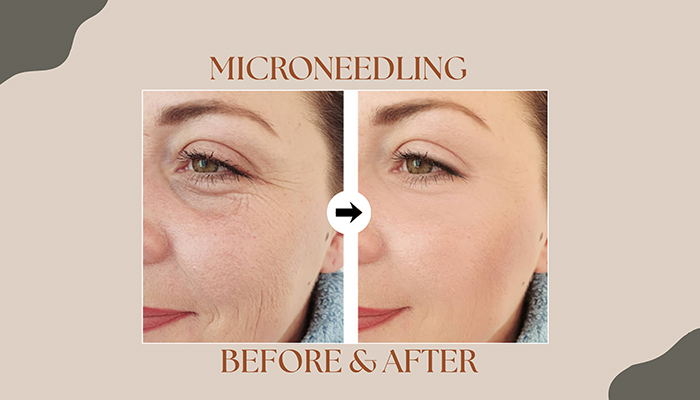

If you have ever looked in the mirror and wished your skin looked a little smoother, clearer, or younger, you are not alone. Millions of people deal with acne scars, fine lines, large pores, and uneven skin tone every single day. That is exactly why microneedling has become one of the most talked-about skin treatments in recent years. When people search for microneedling before and after photos and results, they want real proof not just marketing promises. And honestly, the results speak for themselves.
Microneedling is a minimally invasive skin procedure that uses tiny needles to create controlled micro-injuries on the surface of your skin. Sounds a little scary, right? But here is the thing those tiny punctures actually trigger your skin to heal itself by producing more collagen and elastin. These are the two proteins your skin needs to look firm, smooth, and youthful. The science behind it is solid, and dermatologists have been using this technique for over two decades.
In this guide, you will find everything you need to know about the microneedling before and after journey from what your skin looks like on day one to what it looks like three months later. Whether you are thinking about getting this treatment or just curious about it, this article covers the real timeline, real results, common concerns, costs, expert tips, and everything in between. Let us get into it.
What Is Microneedling?
Microneedling is also called collagen induction therapy. A trained professional uses a device with tiny needles usually between 0.5mm and 2.5mm in length to make small punctures across the skin. These micro-channels heal quickly, but before they do, they send a signal to your body saying: “Something is happening here – send collagen!”
Your body responds by flooding that area with new collagen and elastin fibers. Over the next few weeks and months, the skin rebuilds itself stronger and smoother than before.
There are two main types of microneedling:
- Professional microneedling: Done by a licensed dermatologist or aesthetician using a medical-grade device like a Dermapen or SkinPen. Needle depths can be adjusted based on your skin concern.
- At-home dermarolling: Done using a handheld roller you purchase yourself. Needle depths are much shallower (typically 0.2mm–0.5mm). Results are milder. Safety matters here.
For serious skin concerns like deep acne scars or significant wrinkles, professional treatment is the better route. At-home tools are better suited for maintenance or minor texture improvement.
Microneedling Before and After: What the Research Actually Says
Before we get to the visual timeline, let us talk about what research shows about microneedling before and after outcomes.
Studies published in dermatology journals confirm that microneedling can:
- Increase collagen production by up to 400% after a series of treatments
- Reduce the appearance of acne scars in over 80% of patients after 3–4 sessions
- Improve skin texture and pore size visibly after just one session
- Reduce fine lines and wrinkles by stimulating deep dermal remodeling
- Enhance the absorption of topical serums by up to 2,000 times post-treatment
These are not just anecdotal claims, they are backed by clinical studies. The results do take time, though. Patience is key.
Who Is a Good Candidate for Microneedling?
Microneedling works best for people who have:
- Acne scars (especially atrophic or “pitted” scars)
- Fine lines and early signs of aging
- Large or visible pores
- Uneven skin texture or tone
- Stretch marks
- Dull or tired-looking skin
- Hyperpigmentation or mild sun damage
Who should NOT get microneedling:
- People with active acne breakouts (it can spread bacteria)
- Those with eczema, psoriasis, or rosacea in the treatment area
- People who are pregnant
- Those using blood thinners or Accutane within the last 6 months
- People with a history of keloid scarring
Always have a consultation with a licensed professional before booking a session. They will assess your skin type and medical history before starting treatment.
The Real Microneedling Before and After Timeline
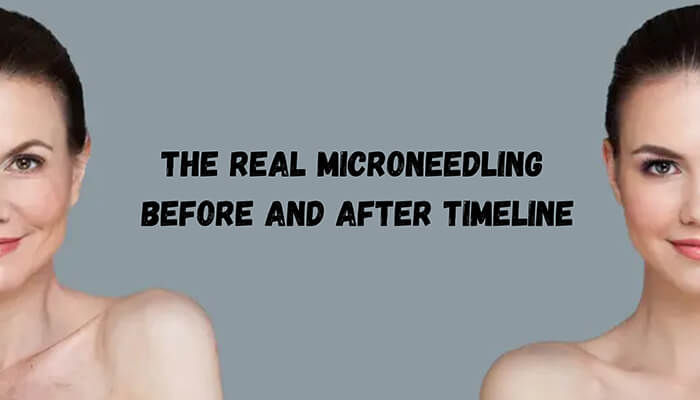
This is the section most people are looking for. Here is what you can genuinely expect at each stage of your microneedling before and after journey.
Immediately Before the Session
Your provider will:
- Clean your skin thoroughly
- Apply a numbing cream (usually 30–45 minutes before treatment)
- Assess needle depth based on your concern
Your skin will look normal at this point. The numbing cream keeps discomfort minimal during the procedure.
During the Treatment (What It Feels Like)
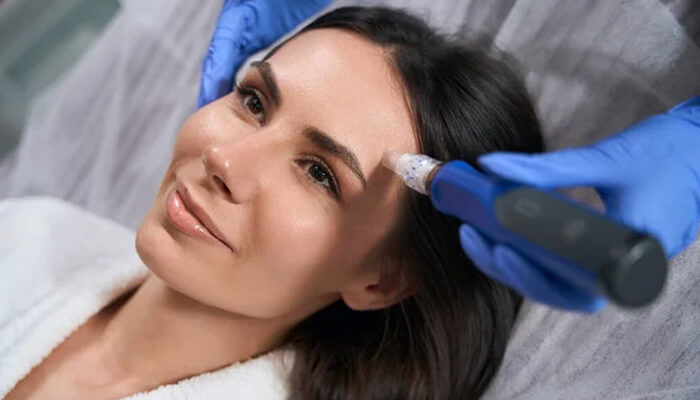
With numbing cream, most people describe the sensation as a slight vibrating or scratching feeling. Sensitive areas like the forehead or nose bridge may feel more intense. The procedure typically takes 30 to 60 minutes depending on the area being treated.
Your skin will begin to look red and feel warm, similar to a mild sunburn, by the time the session is done.
Microneedling Before and After: Day-by-Day Breakdown
| Day | What You See | What You Feel |
| Day 0 (Treatment Day) | Red, flushed skin. Possible minor swelling | Warm, tight, slightly sore |
| Day 1 | Redness continues, possible slight swelling | Skin feels like a sunburn |
| Day 2 | Redness begins to fade. Mild peeling may start | Dryness and tightness |
| Day 3 | Skin looks pink, flaking or peeling starts | Itchy in some areas |
| Day 4–5 | Peeling peaks. Skin looks temporarily rough | Sensitive to touch |
| Day 6–7 | Peeling subsides. Skin starts looking calmer | Smoother feel begins |
| Week 2 | Fresh, smoother skin emerging | Noticeably brighter and softer |
| Week 3–4 | First real results become visible | Pores look smaller, texture improves |
| Month 2–3 | Collagen peaks. Maximum results visible | Significant improvement in scars, tone |
Important: Everyone’s skin heals differently. Your timeline may vary based on needle depth, skin type, and the number of sessions completed.
After One Session – What to Expect
After a single microneedling treatment, most people notice:
- A subtle glow and smoother skin texture
- Slightly reduced pore size
- Mild improvement in fine lines
One session is a great starting point, but it is rarely enough for significant change, especially with deeper concerns like acne scars.
After 3 Sessions – The Turning Point
Three sessions spaced 4–6 weeks apart is where most people see the dramatic microneedling before and after transformation. By this point:
- Acne scars look noticeably shallower
- Skin tone is more even
- Fine lines are visibly reduced
- Pores look significantly smaller
- Overall skin has a healthy, youthful glow
After 6 Sessions – Long-Term Results
For deep scarring, stretch marks, or advanced aging concerns, a full course of 6 sessions can produce remarkable results:
- Severe acne scars can reduce in appearance by 50–80%
- Stretch marks become lighter and less textured
- Significant reduction in deeper wrinkles
- Sustained collagen boost that continues even months after your last session
Microneedling Before and After: Real Results by Skin Concern
For Acne Scars
Acne scars are the number one reason people seek out microneedling. The microneedling before and after results for acne scars are some of the most impressive. Because microneedling breaks up old scar tissue and stimulates fresh collagen, those pitted, depressed scars gradually fill in and become less noticeable. Most dermatologists recommend at least 3–6 sessions for moderate to severe scarring.
For Fine Lines and Wrinkles
Microneedling stimulates collagen at the dermal level, which plumps and firms the skin from the inside out. The crow’s feet around the eyes, forehead lines, and nasolabial folds all respond well to treatment. Results are gradual – but they are also more natural-looking than fillers or Botox for some patients.
For Large Pores
Enlarged pores are often caused by a loss of skin elasticity. As microneedling boosts collagen, the skin around each pore tightens, making them appear smaller. This is one of the fastest visible changes people notice in their microneedling before and after journey, often within 2–3 weeks.
For Hyperpigmentation and Uneven Skin Tone
Microneedling paired with a brightening serum like Vitamin C or tranexamic acid can significantly reduce dark spots and uneven pigmentation. The micro-channels allow active ingredients to penetrate deeply, enhancing results.
For Stretch Marks
Stretch marks on the stomach, thighs, or hips can be improved with microneedling, though results take longer here. Multiple sessions and a higher needle depth are usually required. Improvements of 40–70% are commonly reported over 6 months.
Microneedling Add-Ons That Boost Results
Many clinics now combine microneedling with boosters for enhanced outcomes:
- PRP (Platelet-Rich Plasma): Also called the “vampire facial.” Your own blood’s growth factors are applied to the skin post-needling to accelerate healing and collagen production.
- Hyaluronic Acid Serums: Applied immediately after to deeply hydrate and plump.
- Vitamin C Serums: Boost brightening effects and even out skin tone.
- Radiofrequency (RF) Microneedling: Combines traditional needling with heat energy for even more powerful skin tightening. Common devices include Morpheus8 and Vivace.
Microneedling Aftercare: What You Must and Must Not Do
Good aftercare is what separates good results from great results. Following these guidelines carefully will protect your skin and boost your microneedling before and after outcome.
What You SHOULD Do After Microneedling
- Apply a gentle, fragrance-free moisturizer or hyaluronic acid serum
- Use SPF 30 or higher every single day (your skin is more sensitive to UV)
- Stay hydrated and drink plenty of water
- Sleep on a clean pillowcase
- Use a gentle, non-foaming cleanser for at least a week
- Allow any peeling to happen naturally – do not pick or scratch
What You Should AVOID After Microneedling
- No makeup for at least 24–48 hours (ideally 72 hours)
- No direct sun exposure for at least 1 week
- No sweaty workouts for 24–48 hours (heat and bacteria are a bad combo)
- No retinol, AHAs, BHAs, or strong actives for at least 5–7 days
- No swimming pools or hot tubs (chlorine + open micro-channels = irritation and infection risk)
- No alcohol-based toners or astringents
How Much Does Microneedling Cost?
Cost is one of the most common questions people have alongside microneedling before and after results. Here is a realistic breakdown:
| Treatment Type | Average Cost Per Session |
| Professional microneedling (face) | $200 – $700 |
| RF Microneedling (e.g., Morpheus8) | $750 – $1,500 |
| Microneedling + PRP add-on | $500 – $1,200 |
| At-home dermaroller | $20 – $80 (one-time) |
| Full package (3–6 sessions) | $600 – $3,500 |
Prices vary significantly depending on your location, the clinic’s reputation, and the provider’s experience. Always choose a licensed and trained professional – this is not a treatment to cut corners on to save money.
How to Choose the Right Provider
Choosing the right provider can make or break your microneedling before and after results. Here is what to look for:
- Licensed aesthetician, nurse, or dermatologist with specific microneedling training
- A clinic that uses medical-grade devices (Dermapen, SkinPen, or similar) rather than basic rollers
- Transparent about pricing and number of sessions needed
- Willing to do a thorough skin consultation before treatment
- Has real before-and-after photos of their own patients (not stock photos)
- Positive reviews specifically mentioning aftercare support and follow-up
Do not be afraid to ask questions. A great provider will welcome them.
Common Myths About Microneedling – Busted
Myth 1: Microneedling is extremely painful.
With numbing cream, most people rate the discomfort a 2–3 out of 10. Sensitive areas may feel slightly more intense, but it is very manageable.
Myth 2: Results are instant.
Collagen takes time to build. While your skin may look refreshed right after the redness fades (around day 7), the real magic happens over 4–12 weeks as new collagen matures.
Myth 3: One session is enough.
For significant concerns, one session gives a taste of results. A course of 3–6 sessions is where the transformation really happens.
Myth 4: At-home dermarollers give the same results as professional treatments.
They do not. At-home rollers use much shorter needles and cannot target deeper skin layers. They can help maintain results between professional sessions but should not replace them.
Myth 5: Microneedling works on all skin tones equally well.
Microneedling is generally safe for all skin tones. However, people with darker skin tones (Fitzpatrick IV–VI) should work with a provider experienced in treating melanin-rich skin, as improper technique can trigger post-inflammatory hyperpigmentation.
Microneedling vs. Other Treatments: How Does It Compare?
| Treatment | Best For | Downtime | Sessions Needed | Avg Cost |
| Microneedling | Scars, pores, texture, fine lines | 3–5 days | 3–6 | $200–$700/session |
| Chemical Peel | Surface texture, pigmentation | 1–7 days | 2–4 | $150–$600 |
| Laser Resurfacing | Deep wrinkles, severe scars | 5–14 days | 1–3 | $1,000–$3,000 |
| Botox | Expression lines | None | Every 3–4 months | $300–$600 |
| Dermal Fillers | Volume loss, deep lines | Minimal | As needed | $600–$2,000 |
| At-Home Dermaroller | Mild texture, maintenance | 1–2 days | Weekly/Monthly | $20–$80 |
Expert Tips to Maximize Your Microneedling Results
These are the tips that experienced dermatologists and aestheticians recommend to their patients for the best possible microneedling before and after outcome:
- Start your skin prep 2–4 weeks before treatment. Use a Vitamin C serum and SPF daily. This gives you a stronger starting point.
- Do not combine with active ingredients too soon after. Wait at least 5–7 days before reintroducing retinol or AHAs.
- Stay consistent with follow-up sessions. Spacing sessions 4–6 weeks apart lets your skin build collagen in layers.
- Use a high-quality hyaluronic acid serum right after treatment. Your skin is primed to absorb it.
- Prioritize sleep. Skin heals and rebuilds during deep sleep. Aim for 7–9 hours in the days following treatment.
- Eat foods that support collagen production – Vitamin C-rich fruits, leafy greens, salmon, eggs, and bone broth are all excellent choices.
- Take before photos. It is easy to forget what your skin looked like. Monthly comparison photos are motivating and help you track progress.
Final Thoughts
The microneedling before and after journey is not an overnight transformation – it is a gradual, real, and rewarding process. Your skin did not develop its concerns overnight, and it will not fix them overnight either. But what makes microneedling so powerful is that it works with your skin’s natural healing ability, not against it.
Whether you are dealing with stubborn acne scars, visible signs of aging, large pores, or dull skin, microneedling has proven time and time again to deliver meaningful, lasting results. The key is consistency, proper aftercare, and working with a skilled provider who understands your unique skin.
If you have been on the fence about trying it, consider booking a consultation first. Ask to see their real microneedling before and after photos, talk through your concerns, and get a personalized treatment plan. Your skin has incredible potential – sometimes it just needs a little help unlocking it.
Microneedling Before and After FAQs
1. How long do microneedling results last?
With a proper course of 3–6 sessions, results can last 12–18 months. Maintenance sessions once or twice a year help sustain them long-term.
2. Can microneedling make skin worse temporarily?
Yes, and that is completely normal. Days 2–5 often involve redness, peeling, and a “raw” appearance. This is your skin doing exactly what it should. Push through this phase.
3. How soon after microneedling can I wear makeup?
Wait at least 24–48 hours. Many practitioners recommend waiting 72 hours for full safety. Your pores are open and vulnerable in this window.
4. Is microneedling safe for sensitive skin?
It can be with the right provider and a conservative approach (shallower needles, fewer passes). Always disclose your skin sensitivity in your consultation.
5. What is the best age to start microneedling?
There is no perfect age. People in their 20s use it for acne scars. Those in their 30s–50s use it for anti-aging. It is about skin concern, not age.
6. Does microneedling help with under-eye circles?
