
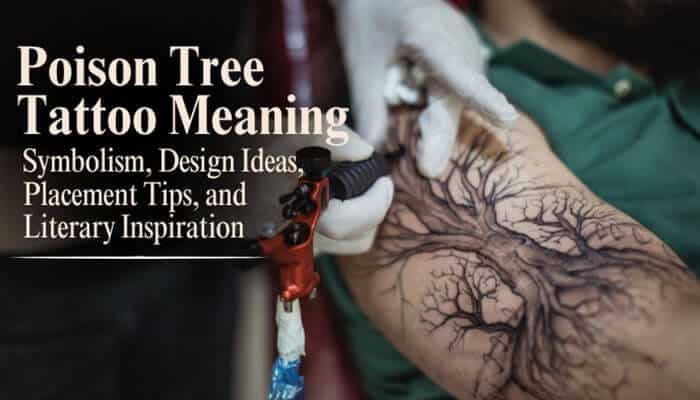

Some tattoos tell a joke. Some tattoos tell a story. And then there’s the poison tree tattoo, the kind of design that makes people stop, tilt their head, and ask, “Wait, what does that mean?” It looks simple at first glance: Just a tree. But once you learn the story behind it, you realize this small piece of art is carrying a lot of emotional weight.
If you’ve been searching for the poison tree tattoo meaning, you’ve probably noticed something interesting. This isn’t a random trend or a design someone picked because it “looked cool” on Pinterest. The poison tree tattoo has real roots (pun intended) in classic poetry, human psychology, and the very personal experience of holding onto anger instead of letting it go. That combination of literature, emotion, and ink is exactly what makes this tattoo so popular with people who want their body art to actually mean something.
In this guide, we’re going to break down everything you need to know about the poison tree tattoo. We’ll cover where the idea came from, what it symbolizes, the design styles people are choosing in 2026, where to place it on your body, and what to think about before you book your appointment. Whether you already know you want a poison tree tattoo or you’re still deciding, this article will give you the full picture in plain, easy-to-understand language.
What Is a Poison Tree Tattoo?
A poison tree tattoo is a tattoo design based on a tree that produces poisoned or “deadly” fruit. It’s usually drawn with twisted branches, deep roots, and a piece of fruit, often an apple, hanging from one of the limbs. Some versions look dark and gothic. Others look soft and almost dreamlike, with watercolor shading or fine line work.
But here’s the part that makes the poison tree tattoo different from a normal nature tattoo: it’s not really about trees at all. It’s about emotions. Specifically, it’s about what happens when we bottle up our anger instead of dealing with it.
People who choose a poison tree tattoo aren’t trying to look scary or edgy for no reason. Most of them are drawn to the deeper meaning: The idea that hidden feelings, if left alone long enough, can grow into something much bigger than they started out as.
The Origin Story: William Blake’s “A Poison Tree”
To really understand the poison tree tattoo, you have to go back to 1794. That’s the year English poet William Blake published a short poem called “A Poison Tree” as part of his collection Songs of Experience.
Here’s the poem’s idea, told simply:
- The speaker gets angry with a friend, talks about it openly, and the anger fades away.
- The speaker also gets angry with an enemy, but this time he says nothing.
- Instead of letting the anger go, he keeps feeding it with fear, fake smiles, and quiet resentment.
- Over time, that hidden anger grows into a tree.
- The tree eventually produces a shiny, tempting apple.
- The enemy sneaks in, eats the fruit, and dies beneath the tree.
Blake wasn’t writing a horror story about a killer apple. He was making a point about human nature: anger you talk about tends to disappear, but anger you hide tends to grow. That single idea expressed anger fades, hidden anger festers is the heart of every poison tree tattoo meaning discussion you’ll find online.
This is exactly why the poison tree tattoo is considered a literary tattoo. It’s not just decoration. It’s a tribute to a poem that’s been studied in classrooms for over two centuries.
What Does a Poison Tree Tattoo Symbolize?
The poison tree tattoo carries more than one meaning. Most people connect it to at least one of these ideas:
- Suppressed anger: Feelings that were never spoken out loud
- Hidden resentment: Bitterness that quietly builds up over time
- Emotional dishonesty: Smiling on the outside while hurting on the inside
- Toxic relationships: Connections that turned harmful because problems were never addressed
- Self-awareness: Recognizing your own patterns of avoiding conflict
- Healing and growth: Choosing honesty after learning the hard way
- Warning to yourself: A personal reminder not to repeat old habits
That last group is important. Not everyone gets a poison tree tattoo to represent pain. Many people get it as a symbol of what they’ve overcome. For them, the tattoo isn’t a wound; it’s proof that they learned something valuable and came out the other side.
Poison Tree Tattoo Meaning: Quick Reference Table
Since the poison tree tattoo can be read in a few different ways, here’s a simple table to help you compare the most common interpretations.
| Interpretation | What It Represents | Common Emotion Behind It |
| Literary Tribute | Honoring William Blake’s poem | Appreciation, intellect |
| Hidden Anger | Emotions that were never expressed openly | Frustration, regret |
| Toxic Relationship Survivor | A painful chapter that has ended | Relief, closure |
| Personal Warning | A reminder to remain emotionally honest | Self-awareness |
| Growth and Healing | Choosing openness after past silence | Hope, strength |
| Duality of Beauty and Danger | Something attractive that hides potential harm | Reflection, caution |
No single meaning is “correct.” The poison tree tattoo is personal, and its meaning usually depends on the story of the person wearing it.
Popular Poison Tree Tattoo Design Ideas
One reason the poison tree tattoo has stayed popular is how flexible it is as a design. It can be small and subtle or large and dramatic, depending on what you want. Here are some of the most requested styles in 2026:
- Blackwork poison tree tattoo: Bold black linework, strong contrast, great for a gothic or moody look
- Fine line poison tree tattoo: Delicate, minimal lines, popular for smaller placements like the wrist or ankle
- Watercolor poison tree tattoo: Soft color blending behind the tree outline, giving a dreamy, artistic feel
- Realistic poison tree tattoo: Detailed bark texture, shading, and a lifelike apple hanging from a branch
- Poison tree tattoo with roots exposed: Roots twisting below the tree to represent buried, hidden emotions
- Poison tree tattoo with a quote: A short line from Blake’s poem added near the design (many people keep this very brief)
- Poison tree tattoo with a skull hidden in the branches: A darker, more symbolic take on danger and consequence
- Minimalist poison tree tattoo: Just a simple silhouette, letting the meaning stay private unless you explain it
There’s no wrong choice here. Some people want their poison tree tattoo to make a bold statement. Others want it small enough that only they know the full story behind it.
Best Placement Ideas for a Poison Tree Tattoo
Where you place a poison tree tattoo can change how it looks and how visible it is. Here’s a breakdown of popular spots.
| Placement | Why People Choose It | Pain Level (1–5) |
| Forearm | Easy to show off and suitable for detailed designs | 2 |
| Upper Arm | Provides room for a larger, more elaborate poison tree tattoo | 2 |
| Rib Cage | Private, meaningful, and hidden unless intentionally shown | 4 |
| Back (Spine or Shoulder Blade) | Ideal for large designs with flowing tree branches | 3 |
| Ankle or Calf | Popular for a small, minimalist poison tree tattoo | 2 |
| Wrist | Subtle, personal, and easy to cover when necessary | 3 |
| Thigh | Offers a large canvas for a detailed, realistic design | 3 |
If this is your first tattoo, smaller placements like the wrist, ankle, or forearm are usually easier to manage. If you’re experienced with tattoos and want your poison tree tattoo to be the centerpiece of a larger design, the back or thigh gives artists more room to work with.
Poison Tree Tattoo and Literary Tattoo Culture
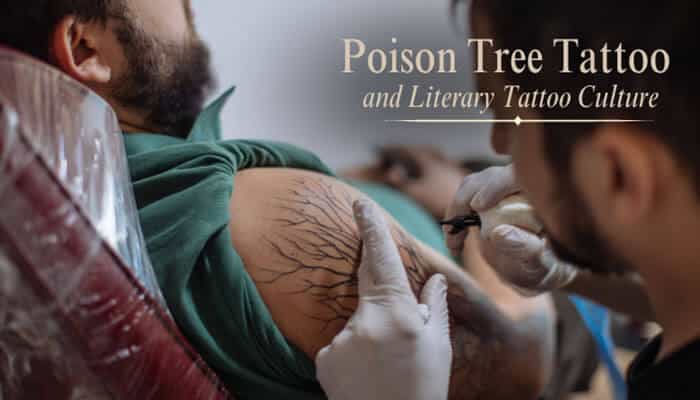
The poison tree tattoo belongs to a bigger category called literary tattoo designs inspired by books, poems, and famous quotes. Literary tattoos have grown in popularity because they let people express something meaningful without spelling it out in plain words.
Choosing a poison tree tattoo puts you in the same category as people who get tattoos inspired by classic novels, favorite authors, or lines of poetry that changed how they see the world. It signals that you value depth over trend. Because Blake’s poem has been taught in schools for generations, the poison tree tattoo also carries an extra layer of credibility; it’s tied to real literary history, not just internet culture.
Things to Consider Before Getting a Poison Tree Tattoo
Before you commit to a poison tree tattoo, it helps to think through a few practical points:
- Know your “why”: Are you getting it for the literary connection, the emotional meaning, or both? Knowing this helps your artist design something that actually fits your story.
- Choose your artist carefully: Look at portfolios and pick someone experienced in the style you want, whether that’s fine line, blackwork, or realism.
- Think about visibility: Decide if you want your poison tree tattoo to be seen daily or kept more private.
- Consider size and detail: More detail (like bark texture or a realistic apple) usually needs a bigger space to look clean over time.
- Be ready for the conversation: People will ask about it. A poison tree tattoo tends to spark curiosity, so think about how much of the story you want to share.
Poison Tree Tattoo Aftercare Tips
Once your poison tree tattoo is done, proper aftercare keeps the linework sharp and the colors (if any) looking fresh for years.
- Keep the area clean and dry for the first few days
- Apply a thin layer of the aftercare ointment your artist recommends
- Avoid direct sunlight until it’s fully healed
- Don’t pick at any scabbing or peeling skin
- Avoid swimming pools, saunas, and long baths during healing
- Wear loose clothing over the tattoo if it’s on the arm, leg, or torso
Good aftercare protects the detail in your poison tree tattoo, especially if it includes fine linework like roots, bark texture, or small leaves.
Final Thoughts
The poison tree tattoo is more than a nature design; it’s a quiet conversation about anger, honesty, and the choice between speaking up or staying silent. Rooted in William Blake’s 1794 poem, this tattoo has grown into a modern symbol that people use to represent everything from past pain to hard-won healing.
Whether you’re drawn to the literary history, the emotional symbolism, or simply the striking visual of a tree with hidden danger in its branches, a poison tree tattoo is a design that rewards a closer look. And honestly, that’s exactly what makes it special: It doesn’t give away its full meaning right away. Just like the poem it comes from, it waits for you to ask.
Poison Tree Tattoo FAQs
1. Is the poison tree tattoo only for people who are angry or bitter?
No. While the design is based on a poem about hidden anger, many people get a poison tree tattoo to represent healing, self-awareness, or the end of a difficult chapter, not ongoing anger.
2. Do I need to know William Blake’s poem to get a poison tree tattoo?
Not at all. Plenty of people connect with the visual symbolism of a poisoned tree without knowing the full poem. But learning the story does add extra meaning to the tattoo.
3. What’s the most popular style for a poison tree tattoo?
Blackwork and fine line designs are currently the most requested, since both styles highlight the branches and roots clearly without needing heavy color.
4. Does a poison tree tattoo have to include an apple?
No. The apple is a common detail because it appears in Blake’s poem, but many people choose a poison tree tattoo with just the tree and roots, leaving out the fruit entirely.
5. Is a poison tree tattoo a good first tattoo?
Yes, especially in a smaller, minimalist style. It’s meaningful, flexible in size, and works well in many placements, including the wrist, ankle, or forearm.
