
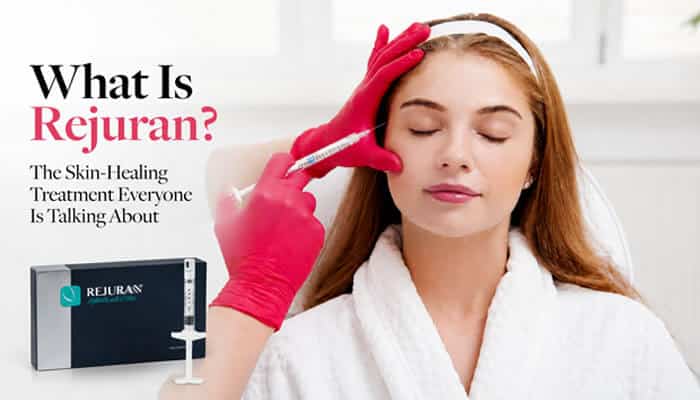

You have probably heard the buzz around Korean beauty treatments, but one name keeps coming up again and again: Rejuran. So, what is Rejuran, exactly? In simple terms, Rejuran is a skin-healing injectable treatment that uses tiny DNA fragments taken from purified salmon to repair, rebuild, and restore your skin from the inside out. It does not freeze your face like Botox or puff it up like fillers. Instead, it quietly goes to work at the deepest layers of your skin, activating your body’s own healing powers to give you smoother, firmer, and more glowing skin over time.
What makes Rejuran different from every other treatment on the market right now is the science behind it. Most skin treatments work on the surface; they hydrate the top layer, or they relax a muscle, or they add volume. But what is Rejuran doing that those treatments cannot? It is actually triggering your skin cells to behave like younger, healthier cells again. The key ingredient called polynucleotides (PN) is structurally very similar to human DNA, which means your body accepts it naturally, without allergic reactions, and uses it to speed up collagen production, reduce inflammation, and repair damaged tissue.
This treatment originally blew up in South Korea and has since taken over aesthetic clinics in Singapore, Australia, the UK, the USA, and beyond. If you are curious about what is Rejuran and whether it could work for your skin, you are in the right place. This guide covers everything how it works, the different types, who it suits, what to expect during a session, how long results last, and how it compares to Botox and fillers. By the end, you will know exactly whether Rejuran is the right investment for your skin goals.
What Is Rejuran?
Rejuran is an injectable skin booster made from polynucleotides (PN), long chains of DNA fragments derived from wild-caught salmon. These DNA fragments are carefully purified and processed to be 100% biocompatible with human skin.
Think of it this way: your skin is like a garden. Over time, the soil (your dermis) gets depleted. Fine lines, large pores, acne scars, and dull skin are signs that the soil is struggling. What is Rejuran doing in this analogy? It is like premium fertiliser, it goes directly into the soil, restores the nutrients, and allows healthy growth to happen again from within.
Rejuran was developed by a South Korean company called PharmaResearch Products and has been clinically proven and FDA-approved. The main component (polynucleotides) is widely accepted as safe, with studies confirming no serious allergic or immune responses in patients.
Quick Fact: The salmon DNA used in Rejuran is structurally very similar to human DNA, so similar that your body does not recognise it as foreign. This is why the treatment has such a strong safety record.
How Does Rejuran Work?
Here is a step-by-step breakdown of what happens inside your skin when Rejuran is injected:
- Tiny micro-injections are made into the dermis (the deep layer of your skin) across the face, neck, or target area.
- The polynucleotides (PN) are released and begin attracting water molecules, which immediately hydrates the skin.
- The PN molecules activate fibroblasts, the cells responsible for producing collagen and elastin.
- Your skin starts producing new collagen, the protein that keeps skin firm and plump.
- PN also has anti-inflammatory properties, which helps calm redness, reduce acne damage, and heal irritated skin.
- Over weeks and months, your skin becomes denser, smoother, and more elastic.
The result is what the Korean beauty world calls glass skin, a naturally luminous, clear, and smooth complexion that looks healthy rather than “done.”
What Does Rejuran Treat?
What is Rejuran good for? Quite a lot, actually. Here are the main skin concerns it addresses:
- Fine lines and early wrinkles: stimulates collagen to plump skin naturally
- Enlarged pores: tightens and refines pore appearance
- Dull, tired-looking skin: restores radiance and skin glow
- Dry, dehydrated skin: deeply hydrates at the dermal level
- Acne scars: promotes tissue repair and scar remodelling (especially Rejuran S)
- Uneven skin texture: smooths rough or bumpy skin
- Loss of elasticity and firmness: rebuilds the skin’s support structure
- Sensitive or damaged skin barriers: calms and repairs over-exfoliated or environmentally stressed skin
- Dark circles and fine lines under the eyes: addressed with Rejuran I (eye formula)
- Crepey neck skin: Rejuran can be applied to the neck and décolletage, too
The 4 Types of Rejuran Explained
Not all Rejuran is the same. There are four main formulations, each designed to target different skin concerns. Here is a clear breakdown:
| Type | Box Colour | Best For | Key Feature |
| Rejuran Healer | Black | Overall skin regeneration, full face | Standard formula; most popular |
| Rejuran S | Blue | Acne scars, deep texture issues | Highest viscosity; stays in place longer |
| Rejuran I (Eye) | White | Under-eye area, dark circles, crow’s feet | Thinnest gel for delicate eye skin |
| Rejuran HB Plus | Red | Dry skin, dehydration, comfort seekers | Contains PN + hyaluronic acid + lidocaine for added hydration and less pain |
Which one is right for you?
- If you want an all-around skin health boost, Rejuran Healer
- If acne scars are your main concern, Rejuran S
- If your under-eyes need help, Rejuran I
- If you have dry skin or are sensitive to pain, Rejuran HB Plus
Your doctor will choose the right formulation based on your individual skin assessment.
Who Is a Good Candidate for Rejuran?

What is Rejuran treatment most suitable for? Here is who benefits most:
Ideal candidates include:
- People in their late 20s to 50s noticing early signs of skin ageing
- Anyone with dull, dehydrated, or tired-looking skin
- People recovering from acne or laser treatments
- Those with a damaged skin barrier from over-exfoliation or harsh products
- Anyone looking for natural-looking results without the “frozen” or “overfilled” look
- People with acne scars or uneven texture
- Those wanting glass skin without surgery
Rejuran may NOT be suitable for you if you:
- Are pregnant or breastfeeding
- Have an active skin infection or open wounds in the treatment area
- Are taking blood thinners or NSAIDs (anti-inflammatory medications)
- Have a known allergy to fish or seafood (discuss with your doctor)
- Have an autoimmune condition (consult your doctor first)
What Is a Rejuran Treatment Session Like? Step by Step
Knowing what to expect makes the whole process much less scary. Here is a typical Rejuran treatment session from start to finish:
Step 1 – Consultation (10–15 mins): Your doctor reviews your skin concerns, examines your skin, and recommends the right Rejuran formulation and dosage for you.
Step 2 – Numbing (20–30 mins): A topical numbing cream is applied generously to the treatment area. This is left on long enough to ensure you barely feel the injections.
Step 3 – Injection (15–20 mins): The doctor performs precise micro-injections across the face (or targeted area). The needle used is ultra-fine, finer than a Botox needle, which helps minimise discomfort and marks on the skin.
Step 4 – Post-Treatment Care (5–10 mins): The clinic may apply a soothing mask or cooling gel. They will also go through your aftercare instructions with you.
What to Expect After Rejuran – Downtime and Recovery
One of the biggest advantages of Rejuran is that it has very minimal downtime. Here is what you might experience:
- Small bumps or papules immediately after injection: these typically subside within 30–60 minutes
- Mild redness or swelling: usually gone within 24–48 hours
- Minor bruising: possible but uncommon; fades in a few days
- Dry or sensitive skin: for the first few days, as the barrier heals
Most people can return to work the same day or the next day.
Rejuran Aftercare Rules (Follow These Carefully)
- No saunas, hot baths, or steam rooms for 1–2 weeks
- No intense exercise for 24–48 hours (sweating can cause infection risk)
- No makeup for at least 24 hours
- No strong exfoliants or active skincare (retinol, AHAs) for 1 week
- Apply gentle moisturiser frequently
- Use SPF 50 sunscreen every day
- Drink plenty of water
When Will You See Rejuran Results?
Here is the truth about Rejuran results and why patience matters:
| Timeline | What You Notice |
| Days 1–3 | Skin feels more hydrated; some initial glow |
| 2–4 weeks after Session 1 | Improved skin texture; skin feels smoother |
| After Session 2 | More noticeable firmness and radiance |
| 3 months after completing course | Peak results best time to evaluate before/after |
| 6–12 months | Effects begin to gradually reduce; maintenance session recommended |
What is Rejuran’s biggest strength here? It is a slow and steady treatment. Unlike fillers that change your face immediately, Rejuran works with your body’s natural collagen cycle, which takes time. Most patients who quit after one session feel disappointed. The science requires at least 3 sessions to see real, lasting change.
How Many Rejuran Sessions Do You Need?
For most patients, the recommended protocol is:
- Initial course: 3–4 sessions, spaced 3–4 weeks apart
- Maintenance: 1 session every 6–12 months
Results from a completed course can last 6–12 months, with some patients reporting skin texture improvements lasting over a year.
Rejuran vs Botox vs Dermal Fillers – What Is the Difference?
This is one of the most commonly asked questions. Here is a clear, honest comparison:
| Feature | Rejuran | Botox | Dermal Fillers |
| How it works | Repairs skin at cellular level | Relaxes facial muscles | Adds volume under the skin |
| Main ingredient | Polynucleotides (salmon DNA) | Botulinum toxin | Hyaluronic acid / other |
| Best for | Skin quality, texture, hydration | Dynamic wrinkles (frown lines, crow’s feet) | Volume loss, deep folds |
| Results visible | 2–4 weeks | 3–7 days | Immediate |
| Duration | 6–12+ months | 3–6 months | 6–18 months |
| Natural look? | Very natural | Can look “frozen” if overdone | Can look “overfilled” if overdone |
| Downtime | Minimal (24–48 hrs) | Minimal | Minimal to moderate |
| Risk of allergic reaction | Very low | Low | Low to moderate |
The bottom line: What is Rejuran’s role compared to these options? It is a skin health treatment, not a volume or movement treatment. Many dermatologists recommend combining Botox and Rejuran. Botox stops wrinkles from forming (by relaxing muscles), while Rejuran heals and improves the skin itself. They are complementary, not competing.
Is Rejuran Safe? What the Research Says
Yes, what is Rejuran’s safety profile? It is very well-documented and reassuring.
- Polynucleotides have been used in medicine for decades (originally for wound healing)
- Studies confirm no serious adverse immune or allergic responses in the vast majority of patients
- The salmon DNA is purified through a rigorous process that eliminates fish proteins, the parts that cause allergies
- It is approved by multiple regulatory bodies and used in thousands of clinics globally
Possible side effects (mostly mild and temporary):
- Redness and swelling at injection sites
- Temporary small bumps (resolve within an hour)
- Bruising (uncommon)
- Dryness or sensitivity for a few days
Serious complications are rare and usually linked to unqualified injectors, not the product itself. Always choose a licensed, experienced medical professional.
Rejuran Cost – What Should You Expect to Pay?
The cost of Rejuran varies by country, clinic, and formulation. Here is a general guide:
| Region | Approximate Cost Per Session |
| South Korea | ₩300,000 – ₩500,000 (~$225–$375 USD) |
| Singapore | SGD $400 – $1,000+ |
| UK / Europe | £250 – £600 |
| USA / Canada | $400 – $900 |
| Australia | AUD $400 – $900 |
| Thailand | THB 9,000 – 18,000 |
Prices vary widely. Always choose a reputable clinic that uses genuine, sealed Rejuran products. Ask them to open the product in front of you. Counterfeit products do exist in the market.
Rejuran vs Skin Boosters (Like Profhilo or Juvederm Hydrate)
People often confuse what is Rejuran with other skin booster treatments. Here is how they differ:
- Skin boosters (e.g., Profhilo, Juvederm Hydrate) use hyaluronic acid (HA) to hydrate the skin. They are excellent for deep hydration but do not actively repair or regenerate skin tissue.
- What is Rejuran? It uses polynucleotides, which actively stimulate cellular repair and collagen production, not just hydration. Rejuran goes deeper and achieves longer-lasting structural improvements.
Some clinics combine both treatments for maximum benefit. The HA booster provides instant hydration while Rejuran works on long-term tissue repair.
Key Takeaways – What Is Rejuran in a Nutshell?
Let us recap the most important points:
- What is Rejuran? A polynucleotide (PN) injectable treatment derived from purified salmon DNA that heals and regenerates skin from within
- It stimulates collagen, repairs damaged cells, and improves skin texture, elasticity, and hydration
- There are 4 types: Healer, S (acne scars), I (eye area), and HB Plus (dry skin + comfort)
- You need 3–4 sessions spaced 3–4 weeks apart for best results
- Results last 6–12 months; maintenance is recommended every 6–12 months
- It is very safe, with minimal downtime and a strong clinical record
- It is different from Botox (which relaxes muscles) and fillers (which add volume). Rejuran works on the quality of your skin itself
Final Thoughts – Is Rejuran Worth It?
If you are looking for a treatment that gives you genuinely healthier skin, not just the illusion of it, then Rejuran is worth serious consideration. It will not give you instant dramatic results, but what it will give you is real, earned improvement that comes from your own skin doing the work. For people dealing with early ageing, post-acne damage, chronic dryness, or just wanting that enviable Korean glass-skin quality, what is Rejuran if not the smartest long-term investment you can make for your complexion?
Always consult a qualified medical practitioner before beginning any injectable treatment. They will assess your skin, recommend the right formulation, and design a treatment plan that makes sense for your skin goals and budget.
Frequently Asked Questions About Rejuran
1. What Is Rejuran?
It is a skin-healing injectable treatment made with polynucleotides derived from purified salmon DNA to repair, hydrate, and improve skin quality.
2. Is Rejuran painful?
Not for most people. With a proper numbing cream applied beforehand, most patients rate the discomfort as mild, similar to a light pinching sensation. Rejuran HB Plus contains lidocaine, making it even more comfortable.
3. Can I wear makeup after Rejuran?
It is best to avoid makeup for at least 24 hours after treatment to reduce the risk of infection through the micro-injection sites.
4. How long before an event should I get Rejuran?
Give yourself at least 3–5 days before any important event to allow redness and bumps to fully subside.
5. Is Rejuran suitable for all skin tones?
Yes. Unlike some laser treatments, Rejuran is suitable for all skin types and tones, including darker skin tones that may be prone to post-inflammatory hyperpigmentation with other procedures.
6. Can men get Rejuran?
Absolutely. What is Rejuran for men? The same thing improved skin health, texture, and vitality. Male patients benefit just as much as female patients.
7. Can I combine Rejuran with other treatments?
Yes, but timing matters. Generally, doctors recommend spacing Rejuran with other injectables by at least 2–4 weeks. Combining with LED therapy or certain skin boosters is often done in the same session.
