
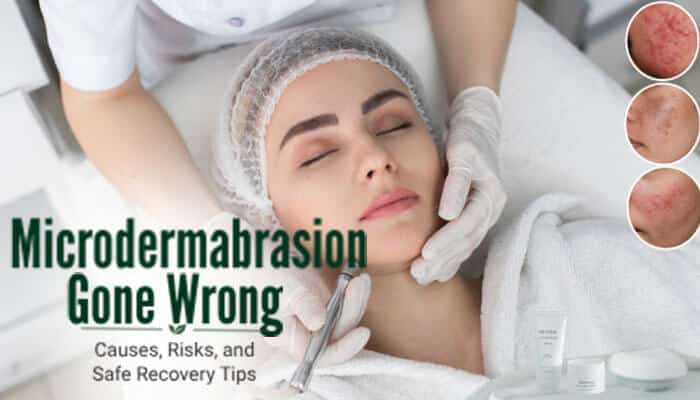

Microdermabrasion is one of the most popular skin treatments in the world. Millions of people walk into spas and clinics every year hoping to walk out with smoother, brighter, younger-looking skin. And most of the time? It works beautifully. But sometimes, more often than people talk about, microdermabrasion gone wrong turns a relaxing facial into a skincare nightmare.
If you have ever come home from a microdermabrasion session with skin that looks worse than when you went in, you are not alone. Redness that lasts for weeks, painful burns, dark spots, or even scarring- these are real things that happen to real people. The treatment sounds simple and safe, but it is a medical-grade procedure that carries real risks when done incorrectly or on the wrong skin type.
This article is your complete guide to understanding microdermabrasion gone wrong, what causes it, what the warning signs are, how to recover, and how to protect yourself from the start. Whether you are thinking about getting the treatment or you are already dealing with a bad reaction, you will find clear, honest, and helpful answers here. We have done the deep research so you do not have to.
What Is Microdermabrasion?
Microdermabrasion is a non-invasive skin resurfacing treatment. It uses a special device to gently exfoliate the outermost layer of your skin, the epidermis. The goal is to remove dead skin cells, unclog pores, and stimulate new cell growth.
There are two main types:
| Type | How It Works | Best For |
| Crystal Microdermabrasion | Sprays tiny crystals (aluminum oxide or sodium bicarbonate) onto the skin and vacuums them back up | General skin texture, sun damage |
| Diamond-tip Microdermabrasion | Uses a diamond-tipped wand to physically exfoliate skin | Sensitive or delicate areas |
| Hydradermabrasion | Combines exfoliation with hydration (e.g., HydraFacial) | Dry or dehydrated skin |
The treatment typically takes 30–60 minutes and is marketed as painless with no downtime. But when microdermabrasion goes wrong, the reality can be very different.
How Common Is Microdermabrasion Gone Wrong?
You might be surprised. Studies and dermatology reports suggest that adverse reactions from microdermabrasion are underreported because many people assume redness, flaking, or irritation is “normal” and wait for it to go away on its own.
Here are some important facts:
- According to the American Society of Plastic Surgeons, microdermabrasion is one of the top non-surgical cosmetic procedures performed annually
- Complications are more common when treatments are performed by undertrained technicians or with incorrect settings
- At-home microdermabrasion gone wrong cases have risen significantly since DIY kits became widely available
- Darker skin tones (Fitzpatrick Type IV–VI) are at significantly higher risk for post-inflammatory hyperpigmentation after a procedure goes wrong
The good news is that most complications from microdermabrasion gone wrong are temporary and treatable if caught early.
Top Causes of Microdermabrasion Gone Wrong
Understanding why microdermabrasion goes wrong is the first step to protecting yourself. Here are the most common reasons:
Untrained or Inexperienced Technician

This is the number one cause. Microdermabrasion requires proper training to understand:
- How much suction pressure to use
- How many passes to make over the skin
- Which skin types can and cannot tolerate the treatment
- How to adjust settings based on skin sensitivity
An undertrained technician can over-exfoliate your skin in minutes, leading to burns, rawness, and long-term damage.
Wrong Treatment for Your Skin Type
Not every skin type is suitable for microdermabrasion. Using this treatment on:
- Rosacea-prone skin: Causes severe flare-ups
- Active acne: Spreads bacteria, worsens breakouts
- Eczema or psoriasis: Triggers painful reactions
- Very sensitive skin: Leads to redness and irritation that takes weeks to heal
Too Many Sessions Too Close Together
Your skin needs time to heal between sessions. Most dermatologists recommend spacing treatments 2 to 4 weeks apart. Doing sessions every few days, which some people try in hopes of faster results, is one of the most common reasons microdermabrasion goes wrong.
Using the Wrong Products Afterward
After microdermabrasion, your skin barrier is temporarily compromised. Applying the wrong products can cause serious damage:
- Retinol or retinoids: Too harsh on freshly exfoliated skin
- AHAs/BHAs (chemical exfoliants): Double exfoliating causes burns
- Fragranced products: Triggers severe irritation
- Heavy oils or occlusive creams: Can trap bacteria and cause breakouts
Poor-Quality At-Home Devices
At-home microdermabrasion kits are everywhere. But many are poorly regulated. Some devices use excessive suction, inconsistent crystal spray, or abrasive heads that are not designed for home use without professional guidance. This is a growing cause of microdermabrasion gone wrong cases.
Skipping the Consultation
- A proper pre-treatment consultation should cover your:
- Skin type and tone
- Medical history (including medications)
- Current skincare routine
- Previous skin treatments
- Allergies
Skipping this step is a red flag. Any clinic that takes you straight to the treatment table without a consultation is putting you at risk.
Warning Signs That Something Is Not Right
Knowing what is normal versus what is a problem after microdermabrasion can save your skin. Here is a simple breakdown:
Normal After Microdermabrasion (Goes Away in 24-48 Hours)
- Mild pinkness or redness
- Slight tightness or dryness
- Minor sensitivity to touch
- Light flaking after 2–3 days
Warning Signs of Microdermabrasion Gone Wrong
- Severe redness that lasts more than 48–72 hours
- Burning or stinging that does not improve
- Swelling beyond mild puffiness
- Blistering this is a serious sign
- Open sores or raw patches on the skin
- Pus or discharge possible infection
- Dark spots forming days after treatment
- Hives or allergic rash
- Skin that feels like sandpaper for more than a week
If you notice any of these signs, stop all active skincare products and see a dermatologist as soon as possible.
Microdermabrasion Side Effects vs. Serious Complications
It is important to know the difference between a normal side effect and a serious complication when microdermabrasion goes wrong.
| Condition | Normal Side Effect | Serious Complication |
| Redness | Mild, fades in 24 hrs | Severe, lasting 3+ days |
| Dryness/flaking | Light flaking after 2–3 days | Peeling in sheets, raw skin |
| Sensitivity | Slight sensitivity to touch | Painful burning sensation |
| Breakouts | None expected | Cystic acne, spreading pimples |
| Skin color changes | None | Hyperpigmentation or hypopigmentation |
| Swelling | Minor puffiness | Significant swelling, hives |
| Scarring | None | Raised or depressed scars |
Microdermabrasion Gone Wrong: Skin Types at Higher Risk
Not all skin types react the same way. Some people are at significantly higher risk of experiencing microdermabrasion gone wrong.
High-Risk Skin Types
- Darker skin tones (Fitzpatrick IV–VI): Higher melanin content means greater risk of post-inflammatory hyperpigmentation (PIH)
- Sensitive skin: The skin barrier is already fragile; microdermabrasion can strip it further
- Skin with active acne: Crystals or the diamond tip can spread P. acnes bacteria across the face
- Rosacea-prone skin: Suction and abrasion inflame already-sensitive blood vessels
- Mature/aging skin: Thinner skin tears more easily under suction pressure
- Skin with eczema, psoriasis, or dermatitis: These conditions compromise the skin barrier, making further exfoliation dangerous
Moderate-Risk Skin Types
- Combination skin with easily irritated T-zone
- Skin that has recently had laser treatment or chemical peels
- Skin on blood thinners or retinoid medications
Lower Risk (But Still Needs Caution)
- Normal to oily skin with no underlying conditions
- Lighter skin tones without active conditions
At-Home vs. Professional Microdermabrasion Gone Wrong
Both professional and at-home treatments carry risks, but in different ways.
At-Home Microdermabrasion Gone Wrong
At-home kits are appealing because they are affordable and convenient. But they are also responsible for a growing number of complications. Here is why:
- No skin assessment before use
- Inconsistent suction pressure in lower-quality devices
- Overuse, people tend to use them more frequently than recommended
- No professional to monitor your skin’s reaction
- Crystals from crystal-based kits can get into the eyes if not used carefully
- Incorrect technique leads to uneven exfoliation
Common at-home mistakes that lead to microdermabrasion going wrong
- Using the device on broken skin or active breakouts
- Moving the device too slowly over one area
- Using too high a suction setting for a beginner
- Not moisturizing properly afterward
- Using on sunburned skin
Professional Microdermabrasion Gone Wrong
Even in a professional setting, microdermabrasion can go wrong if:
- The esthetician is not properly licensed or trained
- The machine settings are not calibrated correctly
- The consultation was skipped or rushed
- The wrong technique is used for your skin type
- The equipment is not properly sterilized (infection risk)
Tip: Always ask to see your technician’s credentials. A licensed esthetician or dermatologist-supervised technician is a must.
Microdermabrasion Burns: What Happens and Why
One of the most alarming cases of microdermabrasion gone wrong is a burn. Yes, this skin treatment can literally burn your face.
How Do Microdermabrasion Burns Happen?
- Too many passes over the same area generate heat and friction
- Excessive suction pulls the skin too hard, creating micro-tears that become raw
- Crystal contamination, old or contaminated crystals, cause irritation
- Sensitive skin areas (around the nose, near the eyes) can burn faster
What Does a Microdermabrasion Burn Look Like?
- Bright red or dark red skin
- Warm to the touch
- Blistering in severe cases
- Raw, weeping skin
- Scabbing as it heals
How to Treat a Microdermabrasion Burn
1. Cool the skin gently with a cool (not ice cold) compress
2. Apply a gentle, fragrance-free moisturizer (like Vaseline or Aquaphor)
3. Do NOT pick at any blistering or peeling skin
4. Avoid all active skincare products (acids, retinol, vitamin C) until fully healed
5. Wear SPF 50+ sunscreen every day. Burned skin is extremely vulnerable to UV damage
6. See a dermatologist if blistering is present or healing does not begin within 72 hours
7. Microdermabrasion and Hyperpigmentation
One of the most common long-term consequences of microdermabrasion gone wrong is hyperpigmentation, dark patches on the skin that appear days or weeks after the treatment.
Why Does Hyperpigmentation Happen?
When the skin is injured or over-irritated, melanocytes (the cells that produce pigment) go into overdrive. This is called post-inflammatory hyperpigmentation (PIH). It is especially common in:
- Medium to dark skin tones
- Areas that were over-treated
- Skin that was exposed to the sun right after microdermabrasion
How to Treat Post-Microdermabrasion Hyperpigmentation:
| Treatment | How It Helps | Timeline |
| Niacinamide | Reduces melanin transfer | 4–8 weeks |
| Vitamin C serum | Brightens dark spots | 6–12 weeks |
| Azelaic acid | Gentle brightener safe for all skin tones | 8–12 weeks |
| Kojic acid | Natural skin-brightening agent | 8–16 weeks |
| Tranexamic acid | Reduces PIH effectively | 8–16 weeks |
| Prescription hydroquinone | Strongest bleaching agent (dermatologist prescribed) | 3–6 months |
Important: Sun protection is non-negotiable when treating hyperpigmentation. UV exposure will make it significantly worse.
Scarring After Microdermabrasion Gone Wrong
Scarring is a more serious and less common complication of microdermabrasion gone wrong, but it does happen.
Types of Scarring
- Atrophic scars (depressed scars, like pitting): Caused by over-exfoliation damaging the dermis
- Hypertrophic scars (raised scars): The skin overproduces collagen during repair
- Hypopigmented scars: Areas that lose pigment permanently
Who Is Most at Risk for Scarring?
- People who pick at peeling or blistering skin after the procedure
- Those with keloid-prone skin (tendency to form raised scars)
- Anyone who had too aggressive a treatment
Scarring Treatment Options
- Silicone gel sheets: Clinically proven to soften and flatten scars
- Microneedling: Stimulates collagen to fill depressed scars (done by a dermatologist)
- Laser therapy: Targets scar tissue specifically
- Dermal fillers: Temporarily fill depressed areas
- Steroid injections: Flatten raised scars
If you develop scarring after microdermabrasion gone wrong, see a board-certified dermatologist. Do not try to treat it yourself.
Infections After Microdermabrasion Gone Wrong
Infection is a serious risk when microdermabrasion is done incorrectly or with unsterilized equipment. Microdermabrasion removes a protective layer of skin, leaving you temporarily more vulnerable.
Signs of Infection After Microdermabrasion
- Yellow or green discharge from the skin
- Increasing redness that spreads (not decreasing)
- Warm, swollen areas
- Fever or flu-like symptoms
- Crust formation that smells unusual
- Pain that gets worse instead of better
Types of Infections That Can Occur
- Bacterial infection: Most common; can cause impetigo-like breakouts
- Viral reactivation: People with herpes simplex virus (cold sores) can experience a full outbreak triggered by microdermabrasion
- Fungal infection: Less common but possible, especially with poor post-care
What to Do If You Suspect Infection
- Do not pop, squeeze, or scratch any affected area
- See a doctor immediately infections need proper diagnosis
- Depending on the type, treatment may include antibiotics, antivirals, or antifungals
- Keep the area clean with gentle, non-irritating cleansers
Safe Recovery Tips After Microdermabrasion Gone Wrong

If you are already dealing with microdermabrasion gone wrong, here is your step-by-step recovery plan.
The First 48 Hours (Damage Control)
- Stop all active skincare, no acids, no retinol, no vitamin C, no scrubs
- Use only a gentle cleanser (like CeraVe Hydrating Cleanser or La Roche-Posay Toleriane)
- Apply a bland, fragrance-free moisturizer multiple times a day (Aquaphor, Vaseline, or CeraVe Healing Ointment)
- Do not touch or pick at your skin. Bacteria from your hands will make it worse
- Apply a cold compress if you have burning or significant redness
- Drink plenty of water, hydrated skin heals faster
- Avoid makeup for at least 48–72 hours
Sun Protection Is Non-Negotiable
After microdermabrasion gone wrong, your skin is extremely photosensitive. UV exposure can:
- Worsen inflammation
- Cause permanent hyperpigmentation
- Slow healing significantly
Use broad-spectrum SPF 50 or higher every single day, even indoors near windows.
Gentle Ingredients That Support Recovery
- Centella Asiatica (Cica): Calms inflammation and supports healing
- Aloe vera: Soothes and hydrates
- Hyaluronic acid: Deeply hydrates without irritating
- Panthenol (Vitamin B5): Repairs the skin barrier
- Ceramides: Rebuild the protective skin barrier
Ingredients to Avoid During Recovery
- Retinol or tretinoin
- AHAs (glycolic, lactic acid)
- BHAs (salicylic acid)
- Benzoyl peroxide
- Essential oils or fragrances
- Vitamin C (L-ascorbic acid form can be irritating)
- Alcohol-based toners
Recovery Timeline
| Day | What to Expect | What to Do |
| Day 1–2 | Redness, tightness, sensitivity | Bland cleanser, barrier cream, cold compress |
| Day 3–5 | Possible flaking or peeling | Keep moisturized, do NOT pick |
| Day 5–7 | Skin starts to settle | Introduce gentle hydrating serums |
| Week 2 | Skin looks more normal | Slowly reintroduce regular routine |
| Week 3–4 | Most people fully healed | Resume normal skincare (except actives) |
| 4+ weeks | Address any lingering pigmentation | Consider niacinamide, azelaic acid |
How to Talk to Your Dermatologist
If microdermabrasion goes wrong, seeing a dermatologist is the smart move. Here is how to make the most of that appointment:
Bring to Your Appointment
- Photos of your skin right after the treatment (and daily after if possible)
- Name of the clinic or spa where treatment was done
- Type of microdermabrasion used (crystal vs. diamond-tip)
- List of all skincare products you have applied since
- Any products the clinic recommended or gave you
Questions to Ask Your Dermatologist
1. What exactly happened to my skin?
2. Do I have a burn, infection, or PIH?
3. What treatment do you recommend?
4. Are there any prescription products that would help?
5. How long will recovery take?
6. When can I safely have microdermabrasion again, if ever?
7. Are there gentler alternatives for my skin type?
How to Avoid Microdermabrasion Going Wrong
Prevention is always better than cure. Here is how to make sure your next microdermabrasion experience is a safe and positive one.
Before Your Treatment
- Choose a licensed professional, look for a certified esthetician or dermatologist-supervised clinic
- Always have a consultation first; any good clinic will insist on this
- Disclose your full skincare routine, especially if you use retinol, prescription creams, or any acids
- Stop retinoids and exfoliating acids at least 5–7 days before treatment
- Avoid sun exposure for at least a week before the procedure
- Do not wax, thread, or shave the treatment area for 5–7 days before
- Tell your technician about any skin conditions, rashes, or active breakouts
- Ask about the machine settings being used. A good technician will explain
- Read reviews of the clinic or spa, and look specifically for mentions of skin reactions
During Your Treatment
- Speak up if anything feels too harsh, painful, or uncomfortable
- A small amount of pressure is normal; pain is not
- Ask your technician how many passes they are doing and why
After Your Treatment
- Follow the aftercare instructions given by your technician to the letter
- Wear SPF 50 every day for at least 2 weeks
- Avoid active skincare ingredients for at least 48-72 hours
- Avoid heat (saunas, hot showers, hot yoga) for 24-48 hours
- Do not pick at any flaking or peeling skin
- Schedule your next session no sooner than 2-4 weeks away
Conclusion
Microdermabrasion gone wrong is more common than most people realize, and it can range from a mild irritation to a serious skin emergency. Understanding the causes, recognizing the warning signs early, and knowing how to recover safely makes all the difference.
The key takeaways from this article:
- Microdermabrasion is not a zero-risk procedure; always treat it like the medical treatment it is
- Untrained technicians, wrong skin types, and over-treatment are the most common causes of microdermabrasion going wrong
- Early intervention prevents temporary problems from becoming permanent ones
Your skin’s recovery depends heavily on what you apply (and avoid) in the days after - Prevention is always better than a cure. Choose your provider carefully, have a proper consultation, and follow aftercare instructions
If you have experienced microdermabrasion gone wrong, do not panic. Most cases heal fully with the right care. See a dermatologist, protect your skin barrier, wear your SPF, and give your skin the time it needs to recover. Your skin is incredibly resilient when you treat it right.
Microdermabrasion Gone Wrong FAQs
1. How do I know if microdermabrasion went wrong or if it is just normal redness?
Normal redness after treatment usually fades within 24 hours. If burning, blistering, swelling, or irritation lasts 48–72 hours, it may be Microdermabrasion Gone Wrong.
2. Can microdermabrasion cause permanent damage?
Most cases of Microdermabrasion Gone Wrong are temporary and improve with proper care. Severe cases may cause lasting scars or pigmentation changes, so early treatment is important.
3. What should I put on my face immediately after microdermabrasion gone wrong?
Use a gentle, fragrance-free barrier cream like Aquaphor or Vaseline. Avoid all active ingredients. Keep the skin clean and moisturized. Apply a cool compress for comfort if needed.
4. Can microdermabrasion cause acne?
Yes. Microdermabrasion gone wrong on acne-prone skin can spread bacteria and cause a significant breakout. It can also trigger cystic acne in some cases. Microdermabrasion should not be performed over active acne lesions.
5. Is it safe to do microdermabrasion at home?
At-home microdermabrasion is usually lower risk because devices are less powerful. Still, Microdermabrasion Gone Wrong can happen with overuse, sensitive skin, or poor technique.
6. How long after microdermabrasion gone wrong can I wear makeup?
Wait at least 48–72 hours before applying makeup after a bad reaction. If your skin is still broken, raw, or weeping, wait longer. Makeup can introduce bacteria and irritate compromised skin.
7. Can I sue a spa if microdermabrasion goes wrong?
Yes, if negligence caused serious harm, you may have legal options. Document everything and speak to a legal professional.
8. What is the difference between microdermabrasion and dermabrasion?
Microdermabrasion Gone Wrong is usually less severe than dermabrasion complications because microdermabrasion only treats the skin’s surface, while dermabrasion goes deeper and carries higher risks.
9. Are there safer alternatives to microdermabrasion?
Yes! If you have sensitive skin or have had microdermabrasion go wrong before, consider:
- Chemical peels (gentle lactic acid): Controlled exfoliation
- Enzyme peels: Natural, gentler exfoliation
- LED light therapy: No abrasion involved
- Gentle physical exfoliation (once a week): Low risk when done correctly
- Hydrafacial: Combines exfoliation with hydration in a gentler way
