
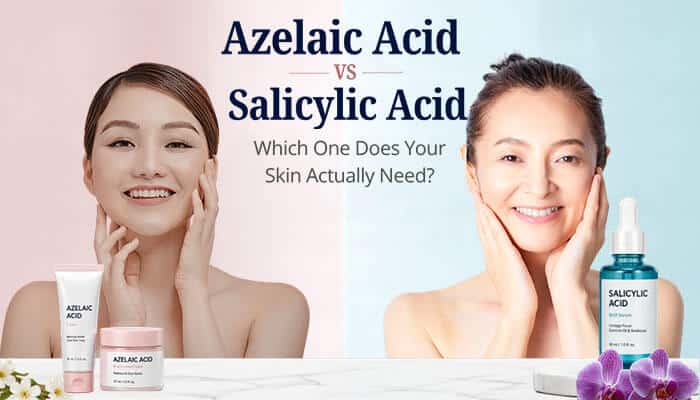

You’ve probably stared at a skincare shelf or a product page at 2 AM, wondering: Azelaic acid vs salicylic acid, which one is right for your skin? Both promise clearer skin. Both sound scientific. And both have a fanbase that swears by them online. But here’s the truth: they are not interchangeable, and picking the wrong one for your skin type could actually slow down your progress.
Skincare doesn’t have to feel like a chemistry exam. Once you understand what each acid actually does, not the marketing version, but the real one, choosing between them becomes surprisingly simple. And that’s exactly what this guide is going to do for you.
Whether you’re dealing with stubborn acne, dark spots that just won’t budge, or oily skin that feels out of control, one of these two ingredients is likely your answer. Let’s figure out which one is yours.
What Is Azelaic Acid?
Azelaic acid is a naturally occurring acid found in grains like wheat, barley, and rye. Your skin actually produces small amounts of it on its own. In skincare, it’s used in concentrations ranging from 10% (over-the-counter) to 20% (prescription strength).
What it does:
- Reduces redness and inflammation
- Fades post-acne dark spots (hyperpigmentation)
- Kills acne-causing bacteria (P. acnes)
- Gently unclogs pores without stripping the skin
- Helps with rosacea, one of its most well-known benefits
Best for:
- Sensitive skin
- People with rosacea or redness-prone skin
- Anyone struggling with dark spots or melasma
- Dry or combination skin types
- Pregnant women (it’s considered safe to always consult your doctor)
Azelaic acid works slowly but steadily. It’s the kind of ingredient that won’t wow you in week one, but in month two, you’ll notice your skin tone has evened out in a way nothing else managed before.
Azelaic Acid Concentrations: 10% vs 15% vs 20% Which Do You Need?
This is a question most articles skip, and it matters a lot:
| Strength | Where to Get It | Best For |
| 10% | Over-the-counter (OTC) | Beginners, sensitive skin, maintenance |
| 15% | Some OTC brands / prescription | Moderate acne, PIH, rosacea |
| 20% | Prescription only | Moderate-to-severe rosacea, melasma, stubborn PIH |
Here’s the thing most people don’t know: 10% OTC azelaic acid delivers results comparable to higher prescription concentrations for many users; it just takes a little longer. The advantage is a significantly lower risk of irritation, making it ideal for long-term daily use. If 10% isn’t moving the needle after 8–10 weeks, that’s the time to talk to a dermatologist about stepping up to prescription strength.
What Is Salicylic Acid?
Salicylic acid is a beta-hydroxy acid (BHA) derived from willow bark. Unlike most acids, it is oil-soluble, which means it can actually penetrate deep inside your pores, not just sit on the surface. This makes it uniquely powerful for oily and acne-prone skin.
Common concentrations in skincare: 0.5% to 2% (OTC), and up to 3–6% in professional treatments.
What it does:
- Dissolves dead skin cells inside pores
- Reduces blackheads and whiteheads
- Controls excess oil production
- Fights active breakouts
- Exfoliates the skin surface
Best for:
- Oily and acne-prone skin
- Blackhead-prone skin (especially on the nose and chin)
- People with clogged pores and congestion
- Teens and adults dealing with hormonal acne
Salicylic acid is the fast-acting, no-nonsense option. You feel it working. Your pores look smaller. Breakouts dry up faster. It’s been in the acne game for decades and for good reason.
Azelaic Acid vs Salicylic Acid: Side-by-Side Breakdown
Here’s a simple comparison so you can see the difference at a glance:
| Feature | Azelaic Acid | Salicylic Acid |
| Type | Dicarboxylic acid | Beta-hydroxy acid (BHA) |
| Main benefit | Fades dark spots + calms redness | Unclogs pores + fights acne |
| Skin type | Sensitive, dry, combo | Oily, acne-prone |
| Works on rosacea? | Yes | No (can irritate) |
| Safe in pregnancy? | Generally yes | Use with caution |
| Exfoliates? | Mildly | Yes, quite well |
| Penetrates pores? | Partially | Deep (oil-soluble) |
| Visible results | 4-8 weeks | 2-4 weeks |
| Risk of irritation | Low | Moderate (if overused) |
| OTC strength | Up to 10% | Up to 2% |
PIH vs PIE: The Dark Spot Difference Nobody Explains
This is one of the most overlooked distinctions in skincare and understanding it will save you months of using the wrong product.
When a pimple heals, it leaves behind one of two types of marks:
1. PIH – Post-Inflammatory Hyperpigmentation
These are the brown or tan spots that appear after a breakout. They’re caused by excess melanin (pigment) produced during inflammation. They’re more common in medium to dark skin tones.
2. PIE – Post-Inflammatory Erythema
These are the pink or red marks left after a pimple heals. They’re caused by damaged blood vessels near the skin surface, not pigment. They’re more common in lighter skin tones.
Why this matters for your acid choice:
- Azelaic acid tackles both PIH and PIE; it inhibits the enzyme that produces excess melanin (tyrosinase) AND reduces the underlying inflammation that causes redness
- Salicylic acid can help PIH indirectly by speeding up cell turnover, but it does nothing for PIE, and can sometimes aggravate redness
If you have brown spots after acne, azelaic acid is your primary treatment. If you have red marks after acne, azelaic acid is your only real option of the two.
The Real Differences That Matter for Your Skin
The Real Differences That Matter for Your Skin: Azelaic Acid vs Salicylic Acid. Understand how each ingredient works to enhance your skin’s health and clarity.
1. Dark Spots vs Active Acne
This is the most important distinction and the one most people miss.
Azelaic acid targets what acne leaves behind the discoloration, the redness, the post-inflammatory hyperpigmentation (PIH). If your skin is mostly clear but you’re left with brown or red spots after a pimple heals, azelaic acid is your weapon.
Salicylic acid targets the acne while it’s happening. It goes into the pore, dissolves the gunk, and prevents new breakouts from forming. If you’re actively breaking out, salicylic acid is the one doing the heavy lifting.
Think of it this way:
- Salicylic acid = the firefighter (puts out the fire)
- Azelaic acid = the restoration team (repairs the damage after)
2. Azelaic Acid Wins – Sensitive Skin
Salicylic acid can be drying and irritating, especially if overused. People with eczema-prone or very reactive skin often find it too harsh.
Azelaic acid, on the other hand, is gentle enough to use daily. It actually has anti-inflammatory properties, meaning it calms the skin rather than aggravating it.
3. Salicylic Acid Is Built for You – Oily Skin
If you’re producing oil like a refinery, salicylic acid is your soulmate. It’s the only common skincare acid that can dissolve in oil, which is exactly why it works so well on the inside of clogged pores. No other acid does this as effectively.
What Happens When You First Start Using These Acids
A lot of people start using azelaic acid, see their skin break out slightly in the first 2-3 weeks, and immediately stop, thinking the product is making things worse. This is a mistake.
Azelaic acid can cause an initial purging phase: As it normalizes skin cell turnover and pushes congestion to the surface, existing clogged pores break out before clearing up. This is normal and temporary. It typically lasts 2–4 weeks and is not a sign the product is wrong for you.
Salicylic acid: At standard OTC concentrations (1–2%) rarely causes significant purging. However, if you use it too often, too soon, or at too high a concentration, it can cause:
- Dryness and flaking
- Increased redness and sensitivity
- A compromised skin barrier that actually makes breakouts worse
How to tell purging from a bad reaction:
| Purging | Bad Reaction |
| Breakouts in your usual acne spots | Breakouts or redness in new areas |
| Resolves within 4–6 weeks | Gets worse or doesn’t improve |
| Skin feels okay between breakouts | Skin feels tight, burning, or raw |
| No new texture issues | Peeling, stinging, or swelling |
If you suspect a bad reaction (not purging), stop using the product and let your skin barrier recover before trying again at a lower frequency.
Side Effects You Should Know Before You Start
Azelaic Acid Side Effects:
- Tingling or mild stinging when first applied: This usually fades within the first week or two
- Initial purging (see above): Temporary and expected
- Dryness: uncommon but possible; easily managed with a good moisturizer
- Paradoxical hyperpigmentation: Extremely rare, but azelaic acid can occasionally trigger darkening in very sensitive skin; discontinue and see a derm if this happens
- Allergic reactions: Rare; patch test before full application
Salicylic Acid Side Effects:
- Dryness and peeling: The most common issue, especially when starting out
- Redness and increased sensitivity: Particularly if combined with other actives like retinol or AHAs
- Over-exfoliation: Using it too frequently breaks down your skin barrier, which leads to more breakouts, not fewer (the opposite of what you want)
- Increased sun sensitivity: Always use SPF
- Worsening rosacea: If your “acne” is actually rosacea, salicylic acid can cause significant flare-ups
When to stop and see a dermatologist:
- Burning, swelling, or hive-like reactions
- Breakouts that keep getting worse after 8 weeks of consistent use
- Any signs of an allergic reaction (spreading rash, itching beyond the treatment area)
- If you’re not sure whether your condition is acne or rosacea, it’s really important to get diagnosed correctly
How to Use Both Acids by Skin Zone
Here’s a practical tip most people don’t know: you don’t have to use the same product on your entire face. Different areas of your face have different needs.
Zone-based application:
- T-zone (forehead, nose, chin): If this is your oiliest zone with blackheads, use salicylic acid here
- Cheeks and jawline: If this is where you get red marks and uneven tone, use azelaic acid here
- Under eyes / around mouth: Neither these areas are delicate; stick to gentle moisturizer
This approach lets you use both acids in the same routine without over-treating any one area.
Ingredient Pairing Guide: What to Use With Each Acid
This is the section most articles leave out, and it’s one of the most searched topics around these ingredients.
Azelaic Acid Pairs Well With:
1. Niacinamide: One of the best combinations in skincare. Both are anti-inflammatory, both reduce redness, and together they’re particularly effective for rosacea-prone skin and post-acne pigmentation. Layer niacinamide first, let it absorb, then apply azelaic acid.
2. Vitamin C: A powerful duo for hyperpigmentation. Vitamin C brightens and protects against new dark spots; azelaic acid inhibits the enzyme that produces excess melanin. Use Vitamin C in the morning and azelaic acid at night for the best results without irritation.
3. Hyaluronic Acid: Azelaic acid can feel slightly drying for some people. Following it with hyaluronic acid gives you the hydration lock you need without interfering with its effectiveness.
4. Retinol / Tretinoin: Azelaic acid in the morning, retinol or tretinoin at night. This is a dermatologist-approved combination for treating both acne and post-acne pigmentation. Introduce them separately, get comfortable with one before adding the other.
5. Salicylic Acid (use carefully): Can be combined, but alternate days rather than layering them in the same session to avoid over-exfoliation.
6. Peptides (e.g., Matrixyl): Azelaic acid is acidic enough to degrade peptide molecules, reducing their effectiveness. Use them on separate days.
Salicylic Acid Pairs Well With:
1. Niacinamide: Salicylic acid unclogs pores; niacinamide regulates oil production and soothes inflammation. Together they’re one of the best combinations for oily, acne-prone skin. Apply salicylic acid first, follow with niacinamide.
2. Hyaluronic Acid: Salicylic acid can be drying. Hyaluronic acid after application keeps the skin hydrated without blocking pores. Essential for anyone using salicylic acid regularly.
3. Benzoyl Peroxide (on alternating days): Salicylic acid unclogs pores; benzoyl peroxide kills acne bacteria. Used on alternate days (not together), they form a powerful acne-fighting system.
4. Retinol (not on the same day): Both accelerate cell turnover. Using them on the same day is a recipe for over-exfoliation. Use salicylic acid in the morning and retinol at night, or alternate days entirely.
5. AHAs (glycolic, lactic acid) on the same day: Double exfoliation = barrier damage. If you use AHAs, do them on different days from salicylic acid.
6. Strong vitamin C serums (same session): Both can lower skin pH significantly when layered together, increasing irritation risk. Use vitamin C in the morning and salicylic acid at night.
Quick Ingredient Pairing Reference Table
| Ingredient | With Azelaic Acid | With Salicylic Acid |
| Niacinamide | Great combo | Great combo |
| Vitamin C | AM/PM split | Separate sessions |
| Hyaluronic Acid | After application | After application |
| Retinol / Tretinoin | Different times | Alternate days |
| Peptides | Separate days | Fine together |
| AHAs (glycolic, lactic) | Alternate days | Not same day |
| Benzoyl Peroxide | Use carefully | Alternate days |
| SPF | Always | Always |
Can You Use Azelaic Acid and Salicylic Acid Together?
Can You Use Azelaic Acid vs Salicylic Acid Together? Discover the benefits and possible drawbacks of combining these two powerful skincare ingredients.
Yes, but carefully. These two ingredients can actually complement each other when used smartly:
- Salicylic acid: Handles active breakouts and pore congestion
- Azelaic acid: Handles the aftermath and maintains skin health
How to layer them without irritating your skin:
- Use salicylic acid in the morning or after cleansing (in a toner or serum)
- Use azelaic acid in the evening as your treatment step
- Don’t apply both at the same time on fresh skin
- Always follow with moisturizer
- Use SPF daily both acids can increase sun sensitivity
If you’re new to actives, start with one for 4–6 weeks before introducing the second. Your skin barrier needs time to adjust.
Who Should Choose Which? A Simple Decision Guide
Choose Azelaic Acid if you:
- Have rosacea or persistent redness
- Are you dealing with dark spots and uneven skin tone
- Have sensitive or dry skin
- Are pregnant (with doctor’s approval)
- Want something gentle you can use every day
Choose Salicylic Acid if you:
- Have oily or combination-oily skin
- Are you struggling with active acne and clogged pores
- Have blackheads, especially around the nose
- Want faster, more visible results
- Need something that controls shine throughout the day
Choose Both if you:
- Have oily skin with post-acne marks
- Experience both active breakouts and lingering discoloration
- Have normal skin with occasional hormonal acne
Tips for Using Each Acid Correctly
Using Azelaic Acid the Right Way:
- Start with a 10% formulation if you’re a beginner
- Apply after cleanser and toner, before moisturizer
- It can be used AM and PM
- Slight tingling is normal when you first start it goes away
- Don’t layer with strong retinoids initially (wait until your skin adjusts)
- Look for formulations: creams work well for dry skin, gels for oily skin
Using Salicylic Acid the Right Way:
- Start 2–3 times a week and increase gradually
- Apply to clean, dry skin. Don’t apply on wet skin (absorbs too fast, can irritate)
- Don’t use on broken or sunburned skin
- Use a good moisturizer after it can be drying
- Don’t combine with other strong exfoliants (AHAs, retinol) on the same day
- A 2% concentration is effective for most people; you don’t need higher concentration
Universal Tips for Both:
- Always wear SPF 30 or higher during the day
- Patch test before using any new acid
- Less is more. Using more product doesn’t give faster results
- Store both away from direct sunlight
- If your skin is extremely irritated, take a break and rebuild your barrier first
Common Myths – Debunked
1. The stronger the acid, the better
Wrong. Higher concentration doesn’t always mean better results. It often means more irritation. 2% salicylic acid is clinically proven to work well for most people.
2. Azelaic acid is only for rosacea
Not true at all. Azelaic acid is excellent for acne, hyperpigmentation, and general skin brightening rosacea is just one of its many uses.
3. Salicylic acid fades dark spots
It helps prevent new ones by reducing breakouts, but it doesn’t directly treat existing hyperpigmentation the way azelaic acid does.
4. You’ll see results in days
Skin takes time. Salicylic acid can start helping within 2 weeks. Azelaic acid for hyperpigmentation? Give it 6–8 weeks minimum. Consistency beats intensity every time.
What Dermatologists Actually Say
Dermatologists generally recommend:
- Azelaic acid: As a first-line treatment for rosacea and post-inflammatory hyperpigmentation especially in patients with sensitive skin who can’t tolerate stronger actives
- Salicylic acid: As the go-to for comedonal acne (blackheads, whiteheads) and oily skin types
- Combination use: For patients who deal with both acne and pigmentation issues, as long as the skin is introduced to both gradually
The takeaway from most clinical research: neither ingredient is universally better; it’s always about the right match for the individual skin concern.
Azelaic Acid vs Salicylic Acid for Specific Concerns
| Concern | Best Choice |
| Blackheads & whiteheads | Salicylic Acid |
| Post-acne dark spots | Azelaic Acid |
| Rosacea | Azelaic Acid |
| Oily/shiny skin | Salicylic Acid |
| Acne + pigmentation combo | Both (different times) |
| Sensitive, easily reactive skin | Azelaic Acid |
| Hormonal breakouts | Salicylic Acid |
| Melasma | Azelaic Acid (with Vitamin C) |
| Teen acne | Salicylic Acid |
| Adult acne with marks | Both |
The Bottom Line
The azelaic acid vs salicylic acid debate doesn’t have one winner; it has two very different champions for two very different jobs.
If your skin is oily, congested, and breaking out actively, salicylic acid is what you need right now. It’s going to go deep into your pores and do the work.
If your main issue is redness, uneven skin tone, dark spots, or sensitivity, azelaic acid is going to quietly transform your skin over the next couple of months in a way that surprises you.
And if your skin is dealing with both? Use both just at different times and with a little patience while your skin adjusts.
The best skincare routine isn’t the most complicated one. It’s the one you actually stick to, with ingredients that match what your skin is genuinely dealing with.
Ready to Take Action?
Here’s what to do next:
1. Identify your #1 skin concern: Active acne, dark spots, redness, or oiliness
2. Pick one acid: Based on this guide and commit to it for 6 weeks
3. Track your skin: Take weekly photos in the same lighting so you can actually see progress
4. Don’t overdo it: More product, more often, is not better
5. Protect your skin with SPF every single day: Both acids make your skin more sensitive to the sun
Still unsure which one is right for you? Drop your skin type and concerns in the comments happy to help you figure it out.
Azelaic Acid vs Salicylic Acid FAQs
1. Can I use azelaic acid every day?
Yes. Azelaic acid is gentle enough for daily use, morning and evening. Most people tolerate it well, even with consistent use.
2. Which is stronger, azelaic acid or salicylic acid?
They’re strong in different ways. Salicylic acid is more aggressive and faster-acting for pore clearing. Azelaic acid is more powerful for treating pigmentation and redness. Neither is objectively “stronger”; it depends on what you’re treating.
3. Does salicylic acid fade dark spots?
Not directly. It can help exfoliate pigmented skin cells faster, which speeds up fading but it doesn’t target the pigment production process. Azelaic acid does that job better.
4. Is azelaic acid safe during pregnancy?
Azelaic acid is generally considered safe during pregnancy, making it one of the few acne treatments suitable for pregnant women. That said, always check with your OB or dermatologist before adding anything to your routine during pregnancy.
5. How long before I see results?
Salicylic acid: 2–4 weeks for breakout improvement. Azelaic acid: 4–6 weeks for initial improvement, 8–12 weeks for significant pigmentation results. Patience is not optional it’s the whole strategy.
6. What if neither is working after 3 months?
See a dermatologist. You may need prescription-strength treatments, a different diagnosis (like rosacea being mistaken for acne), or a combination approach that includes tretinoin, antibiotics, or other prescription actives.
