


Acne Between Eyebrows can be especially frustrating because even one small pimple is easy to notice in the center of the face. You may see whiteheads, blackheads, small red bumps, or occasionally a deeper, painful spot. While some online “face mapping” claims link eyebrow acne to specific internal organs, acne in this area is usually better explained by ordinary skin biology, hormones, products, sweat, friction, and clogged pores.
If you regularly notice Acne Between Eyebrows, look closely at what touches this part of your face. Hair oils, styling products, eyebrow cosmetics, sunscreen, sweat, hats, bangs, and even frequent touching can contribute to breakouts. The American Academy of Dermatology (AAD) notes that oily hair-care products can clog pores and cause acne on the forehead and around the hairline.
The good news is that mild Acne Between Eyebrows can often be managed with a simple, consistent skin-care routine and proven acne ingredients. The key is identifying likely triggers, avoiding irritation, and giving treatment enough time to work rather than trying a different home remedy every few days. Persistent, painful, scarring, or unusual bumps deserve evaluation by a dermatologist.
What Is Acne Between Eyebrows?
Acne Between Eyebrows refers to acne lesions that appear in the glabella, the smooth skin between the eyebrows and just above the bridge of the nose. Acne develops when a hair follicle or pore becomes clogged with oil and dead skin cells. Depending on what happens inside the follicle, you may develop whiteheads, blackheads, inflamed pimples, or deeper nodules and cysts.
Common types include:
- Whiteheads: Closed, clogged pores that appear white or flesh-colored.
- Blackheads: Open clogged pores that look dark at the surface.
- Papules: Small, inflamed red or skin-colored bumps.
- Pustules: Inflamed pimples containing visible pus.
- Nodules or cysts: Larger, deeper, painful lesions that carry a greater risk of scarring.
Knowing which type you have matters because different acne treatments work in different ways.
Why Am I Getting Acne Between My Eyebrows?
There is rarely one single cause. Several factors may work together.
1. Excess Oil and Clogged Pores
The central face can become oily in many people. When excess sebum mixes with dead skin cells, pores can become blocked. A clogged follicle may first form a whitehead or blackhead. Inflammation can then turn it into a red, tender pimple.
This is the basic biological process behind most acne, not evidence that your body is “detoxing” through your eyebrows.
2. Hair Products May Reach Your Forehead
Take a look at your hair-care routine if your breakouts occur mainly around your eyebrows, forehead, temples, or hairline.
Products such as:
- Hair oils
- Pomades
- Waxes
- Styling creams
- Leave-in conditioners
- Gels
- Sprays
Can leave residue on nearby skin. The AAD describes product-related breakouts as acne cosmetica. Oils in some hair products can reach the skin, clog pores, and produce whiteheads or small bumps.
If you suspect this problem, look for products labeled oil-free, non-comedogenic, non-acnegenic, or won’t clog pores.
3. Eyebrow Makeup and Skin-Care Products
Your eyebrow pencil, brow gel, concealer, foundation, moisturizer, or sunscreen could also contribute.
This does not mean everyone with acne must stop wearing makeup. The AAD says people with acne can use makeup, but recommends choosing non-comedogenic products and removing makeup before bed.
Also clean reusable makeup brushes and applicators regularly.
4. Hormonal Changes
Hormones influence the skin’s oil glands, which helps explain why acne commonly begins during puberty. Hormonal changes can also contribute to acne during adulthood.
Breakouts may change around:
- Puberty
- Menstrual cycles
- Pregnancy
- Starting or stopping certain hormonal medications
However, location alone cannot tell you that a pimple is “hormonal.”
5. Sweat and Friction
Sweat itself is not the only issue. Problems can develop when sweat, oil, cosmetics, and friction remain against the skin.
Possible triggers around the forehead include hats, helmets, headbands, tight caps, and other equipment rubbing repeatedly against the area. After heavy sweating, gently cleansing the face can help prevent residue from sitting on acne-prone skin.
6. Touching or Picking the Area
Many people touch the space between their eyebrows without realizing it, especially while concentrating, adjusting glasses, grooming eyebrows, or sitting at a desk. Picking is an even bigger concern.
Squeezing Acne Between Eyebrows can increase inflammation and make a blemish take longer to heal. It also raises the risk of scarring and post-inflammatory dark marks.
7. Stress May Make Existing Acne Worse
Stress is often blamed for every breakout, but the relationship is more nuanced. Stress does not necessarily create acne from nothing. Research suggests that it can worsen existing acne. The AAD notes that acne severity may increase as stress intensifies.
Stress may also affect sleep and skin-care habits, making breakouts harder to control.
Does Acne Between Eyebrows Mean a Liver Problem?
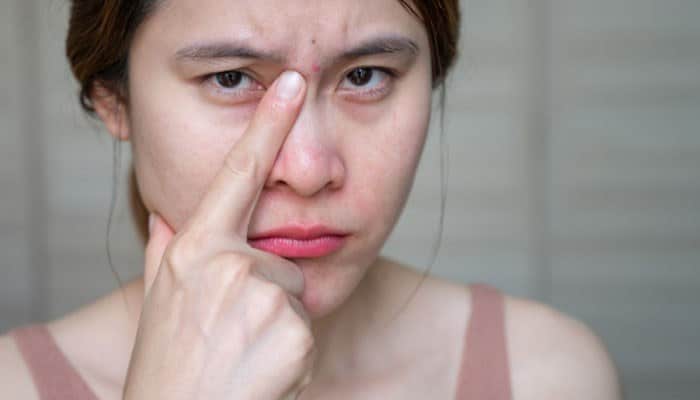
There is no reliable medical basis for diagnosing liver problems simply from the location of a pimple between your eyebrows. Online acne face maps sometimes claim that different areas of the face correspond to organs such as the liver, stomach, or kidneys. Such maps should not replace evidence-based diagnosis.
A dermatologist evaluates acne based on factors such as the appearance and severity of lesions, age, medications, skin-care habits, hormonal history, and other symptoms.
If you have symptoms that concern you about your liver or another medical condition, speak with a healthcare professional rather than trying to diagnose the condition from acne location.
Common Triggers at a Glance
| Possible trigger | How it may contribute | What you can do |
| Excess oil | Helps pores become clogged | Use gentle, non-comedogenic skin care |
| Hair products | Oily residue can reach the forehead | Choose oil-free/non-comedogenic products |
| Brow makeup | Some products may clog or irritate skin | Remove makeup nightly and clean applicators |
| Hormonal changes | Can increase oil production | Track patterns and discuss persistent acne with a clinician |
| Sweat and friction | Can aggravate acne-prone skin | Cleanse gently after heavy sweating |
| Picking pimples | Increases inflammation and scar risk | Leave blemishes alone |
| Stress | May worsen existing acne | Prioritize sleep and healthy stress management |
How to Get Rid of Acne Between Eyrows
Treating Acne Between Eyebrows does not require an aggressive ten-step routine. In fact, using too many products can irritate your skin.
Evidence-based acne care usually works better when it is simple and consistent.
Step 1: Wash Gently
Wash your face twice daily and after activities that cause heavy sweating.
Use:
- Lukewarm water
- A gentle cleanser
- Your fingertips
Avoid scrubbing with rough washcloths, brushes, or harsh exfoliating tools. Excessive scrubbing does not clean acne out of pores and can irritate already inflamed skin.
Step 2: Consider Salicylic Acid for Clogged Pores
Salicylic acid helps unclog pores and exfoliate the skin. It can be particularly useful when Acne Between Eyebrows consists mainly of whiteheads and blackheads.
Follow the product directions and avoid layering several strong exfoliating products at once.
Step 3: Consider Benzoyl Peroxide for Inflamed Pimples
Benzoyl peroxide is another established topical acne treatment and is strongly recommended in AAD acne guidelines. It can be useful for inflammatory acne. Higher strength does not automatically mean better results; the AAD advises that starting with a 2.5% product can help reduce dryness and irritation.
Be aware that benzoyl peroxide can bleach towels, pillowcases, clothing, and hair.
Step 4: Adapalene May Help Prevent New Breakouts
Adapalene is a topical retinoid that helps unclog pores and prevent acne formation. Topical retinoids are among the treatments strongly recommended by the AAD’s acne guidelines.
Because the eyebrow area is close to the eyes, take care not to get acne medications into your eyes. Follow the product label and seek professional advice if you are unsure whether a retinoid is suitable for you, particularly during pregnancy.
Step 5: Moisturize Your Skin
Skipping moisturizer because your skin feels oily can backfire when acne treatments leave the skin dry and irritated.
The AAD notes that treatments including benzoyl peroxide, salicylic acid, and retinoids can dry or irritate the skin, and an appropriate moisturizer may improve tolerability. Choose a moisturizer labeled non-comedogenic or won’t clog pores.
Step 6: Wear Sunscreen
Use a broad-spectrum, water-resistant sunscreen with SPF 30 or higher when outdoors. For acne-prone skin, look for a non-comedogenic formulation.
Sun protection is also important when you have post-acne marks or use treatments that can make your skin more sensitive.
A Simple Routine for Acne Between Eyebrows
You do not need to introduce every acne ingredient simultaneously.
Morning routine:
- Wash with a gentle cleanser.
- Apply an appropriate acne treatment if directed.
- Use a non-comedogenic moisturizer.
- Finish with SPF 30+ sunscreen.
Evening routine:
- Remove makeup completely.
- Wash with a gentle cleanser.
- Apply your acne treatment according to its directions.
- Apply moisturizer if needed.
Give a routine time to work. The AAD notes that some acne treatments may take several weeks to show improvement, and product-related acne may take around four to six weeks to clear after the pore-clogging product is stopped.
What Should You Avoid Putting on Eyebrow Pimples?
Social media is full of fast acne “hacks,” but irritation can make an already visible breakout look worse.
Avoid:
- Squeezing or popping pimples
- Scrubbing aggressively
- Constantly switching acne products
- Applying toothpaste
- Using harsh DIY mixtures around the eyes
- Covering pimples repeatedly with pore-clogging cosmetics
Toothpaste, in particular, is not an evidence-based acne treatment. Dermatologists recommend using proven ingredients such as adapalene, benzoyl peroxide, and salicylic acid instead.
Could It Be Something Other Than Acne?
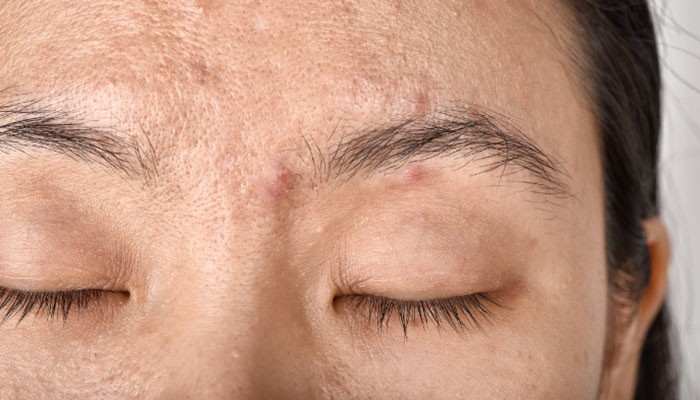
Not every bump between your eyebrows is acne. For example, Malassezia folliculitis, sometimes informally called “fungal acne,” can cause clusters of similar-looking small bumps and may be itchy. Other conditions can also resemble acne.
A dermatologist can distinguish acne from folliculitis, dermatitis, irritation, and other skin conditions.
Consider professional evaluation when bumps are very itchy, spread rapidly, repeatedly return despite appropriate acne care, or simply do not look like your usual pimples.
When Should You See a Dermatologist?
Mild Acne Between Eyebrows can often be managed with over-the-counter care, but professional treatment is appropriate when acne becomes persistent or severe.
See a dermatologist if:
- You develop deep, painful nodules or cysts.
- Acne is leaving scars.
- Dark marks are becoming a major concern.
- Your breakouts continue despite consistent treatment.
- The bumps are unusually itchy or all look identical.
- Acne suddenly becomes severe.
- You are unsure whether the bumps are actually acne.
- Acne is significantly affecting your confidence or quality of life.
Dermatologists can offer prescription topical treatments, oral medications, hormonal treatments for appropriate patients, and isotretinoin for severe acne. Current AAD guidelines support multiple treatment options, emphasizing that acne therapy should be tailored to the individual.
How to Prevent Acne Between Eyebrows
Once the skin improves, prevention becomes the next goal.
Try these practical habits:
- Keep oily hair away from your forehead.
- Shampoo regularly if your hair is oily.
- Check hair, brow, makeup, sunscreen, and skin-care labels.
- Choose non-comedogenic products when possible.
- Remove makeup before sleeping.
- Clean makeup brushes regularly.
- Wash hats and headbands that touch your forehead.
- Cleanse after heavy sweating.
- Avoid touching the area unnecessarily.
- Never routinely squeeze pimples.
- Follow one appropriate acne routine consistently.
If you suspect a hair product, remember that residue can remain on pillowcases, hats, and headbands. The AAD recommends washing items that regularly come into contact with the head when hair-care products are causing breakouts.
Conclusion
Acne Between Eyebrows is usually not a mysterious warning from a particular internal organ. Like acne elsewhere on the face, it generally develops when pores become clogged and inflammation follows. Hormonal changes, oily hair products, cosmetics, sweat, friction, and everyday skin-care habits may all contribute.
For mild Acne Between Eyebrows, start with the basics: cleanse gently, avoid pore-clogging products, keep hair products away from the area, stop picking pimples, moisturize appropriately, use sunscreen, and consider evidence-based acne ingredients such as salicylic acid, benzoyl peroxide, or adapalene when suitable. Consistency matters more than an aggressive routine.
If your acne is painful, deep, persistent, causing scars, or not responding to appropriate home treatment, consult a dermatologist. A correct diagnosis and personalized treatment plan can control breakouts while reducing the risk of long-term scarring and discoloration.
Acne Between Eyebrows FAQs
1. Why do I keep getting acne between my eyebrows?
Recurring Acne Between Eyebrows may be related to clogged pores, oily skin, hormonal changes, hair or eyebrow products, makeup, sweat, friction, or repeated touching. Look for patterns rather than assuming the location represents an internal health problem.
2. Is acne between the eyebrows hormonal?
It can be influenced by hormones, but you cannot determine whether acne is hormonal based solely on where it appears. Hormones affect oil-gland activity throughout acne-prone skin.
3. Can eyebrow makeup cause acne?
Yes, certain cosmetics may contribute to clogged pores in acne-prone people. Choose products labeled non-comedogenic or won’t clog pores, remove makeup before bed, and regularly clean brushes and applicators.
4. Does dandruff cause acne between eyebrows?
Dandruff itself is not the standard cause of acne. However, oily scalp and hair products can affect forehead skin, while seborrheic dermatitis can sometimes involve the eyebrows and may be mistaken for acne. Persistent flaky, red, or itchy skin deserves a proper diagnosis.
5. Should I pop a pimple between my eyebrows?
No. Picking and squeezing can increase inflammation, delay healing, and increase the risk of scars and dark spots.
6. What is the best treatment for acne between eyebrows?
There is no single best treatment for everyone. Evidence-based options include benzoyl peroxide, topical retinoids such as adapalene, salicylic acid, and azelaic acid. The appropriate choice depends on the type and severity of acne and your skin.
7. How long does eyebrow acne take to clear?
Acne treatment is gradual. Some people begin noticing improvement after several weeks. If a pore-clogging hair product is responsible, the AAD says acne may take approximately four to six weeks to clear after stopping the offending product.
8. Can stress cause acne between eyebrows?
Stress is not considered a simple direct cause of acne, but evidence suggests it can worsen existing breakouts.
