


Is It Bad to Wash Your Hair Everyday? It is one of those hair-care questions that sounds like it should have a simple yes-or-no answer. In reality, washing your hair every day can be perfectly fine for some people and too much for others. Your scalp’s oil production, hair texture, activity level, styling habits, and the products you use all affect how often you need shampoo.
If you have ever washed your hair in the morning only to find your roots greasy again by evening, daily washing may feel necessary. Someone with dry, curly, coily, bleached, or very thick hair may have the opposite experience. Washing every day can leave that person’s hair feeling rough, tangled, or harder to manage. This is why a fixed washing schedule does not work for everyone.
So, Is It Bad to Wash Your Hair Everyday? Not automatically. The American Academy of Dermatology (AAD) recommends washing according to how quickly your scalp and hair become dirty or oily. People with straight hair and oily scalps may even need daily shampooing, while dry, textured, curly, or thick hair usually needs washing less often. The goal is not to wash as often or as little as possible. The goal is to keep your scalp clean without making your hair unnecessarily dry.
Is It Bad to Wash Your Hair Everyday?
For many people, washing hair every day is not harmful when the scalp needs frequent cleansing and a suitable shampoo is used.
Daily washing may make sense when you:
- Have a naturally oily scalp
- Have fine or straight hair that becomes greasy quickly
- Exercise or sweat heavily every day
- Use styling products that build up quickly
- Develop scalp oil or discomfort between washes
- Have been advised to wash frequently because of a scalp condition
However, daily shampooing may be too frequent if your hair becomes dry, brittle, frizzy, tangled, or difficult to manage afterward.
Cleveland Clinic notes that washing frequency depends on factors including hair type, hair length, and age. Washing too frequently can increase dryness and breakage in some people, especially those with longer or curly hair.
Why Does Hair Need to Be Washed?
To understand Is It Bad to Wash Your Hair Everyday, it helps to understand what shampoo actually does. Your scalp naturally produces an oily substance called sebum. Sebum is not dirt. It helps protect the skin and hair, but oil can mix with sweat, dead skin cells, microorganisms, pollution, and styling-product residue.
Shampoo helps remove this buildup. This means washing serves an important purpose. The problem begins when your washing routine does not match what your scalp and hair actually need.
Too little cleansing can allow oil and residue to accumulate. Too much cleansing, especially with products that do not suit your hair, may leave the hair feeling dry.
Is Washing Your Hair Every Day Bad for Your Scalp?
Not necessarily. If you have an oily scalp, daily washing can help remove excess oil and buildup. The AAD specifically says people with straight hair and oily scalps may want to shampoo every day.
The condition of your scalp matters more than following a popular rule such as “never shampoo daily.”
Regular cleansing removes:
- Excess sebum
- Sweat
- Dead skin
- Styling-product residue
- Environmental dirt and debris
On the other hand, if daily washing repeatedly leaves your scalp feeling tight, dry, itchy, or irritated, your routine may need changing. Sometimes the problem is not how often you wash but the shampoo, water temperature, or technique you use.
Can Washing Your Hair Every Day Cause Hair Loss?
This is an important concern when people ask, Is It Bad to Wash Your Hair Everyday? Seeing hairs in the shower does not automatically mean shampoo caused those hairs to fall out. Hair naturally sheds as part of its growth cycle, and loose hairs often become noticeable during washing and detangling.
However, damaged hair can break more easily. Aggressive scrubbing, rough towel drying, excessive heat, harsh chemical treatments, and pulling at wet hair can increase physical damage. Wet hair should therefore be handled gently. The AAD recommends using appropriate detangling techniques because wet hair can be delicate.
If you notice sudden, severe, patchy, or unexplained hair loss, do not simply change your shampoo schedule and assume the problem is solved. A dermatologist can help identify the cause.
What Happens If You Shampoo Too Often?

Is It Bad to Wash Your Hair Everyday when your hair does not actually need daily cleansing? It can be.
Possible signs that your current routine is too harsh include:
- Hair feels dry shortly after washing
- Ends become rough or brittle
- Hair tangles more easily
- Curls lose softness or definition
- Hair appears increasingly frizzy
- Scalp feels uncomfortable after shampooing
- Hair breaks easily during brushing or styling
These problems are more likely to matter for naturally dry, curly, coily, chemically treated, or heat-damaged hair.
The answer is not necessarily to stop washing for a week. You may simply need a gentler shampoo, better conditioning, or fewer shampoo days.
How Often Should You Wash Your Hair?
Here is a practical starting point based on hair and scalp characteristics:
| Hair or Scalp Type | Possible Starting Routine | Why |
| Very oily scalp | Daily or every other day | Helps control oil and buildup |
| Fine, straight hair | Daily to every few days | Oil can become visible quickly |
| Normal scalp | Every few days as needed | Adjust according to oil and buildup |
| Dry or thick hair | Less frequently as needed | Helps avoid unnecessary dryness |
| Curly hair | Less frequently as needed | Natural oils move down curls more slowly |
| Coily/textured hair | Often considerably less frequently | Hair tends to need more moisture retention |
| Very sweaty scalp | Clean after heavy sweating as needed | Helps remove sweat and buildup |
| Dandruff-prone scalp | Depends on symptoms and treatment | Medicated shampoo may require its own schedule |
These are starting points, not medical rules. The AAD says dry, textured, curly, or thick hair should generally be shampooed when needed and advises washing at least every two to three weeks as appropriate.
Oily Hair: Is It Bad to Wash Your Hair Everyday?
For naturally oily hair, Is It Bad to Wash Your Hair Everyday? Often, no. Sebaceous glands in your scalp produce oil continuously. Some people simply produce more noticeable oil than others.
Fine and straight hair can also look greasy faster because oil can travel down straight strands more easily.
If your roots become greasy quickly, daily washing with an appropriate shampoo may be reasonable. You do not need to deliberately tolerate an uncomfortable, oily scalp just because someone online claims everyone should shampoo only once a week.
Pay attention to how your scalp responds.
What About Dry Hair?
Dry hair needs a different approach. When people with naturally dry hair ask Is It Bad to Wash Your Hair Everyday, daily shampooing is more likely to be unnecessary or leave the lengths feeling drier.
Dryness may be more noticeable if your hair is:
- Naturally coarse
- Curly or coily
- Bleached
- Frequently colored
- Chemically straightened
- Regularly exposed to high heat
- Long with older, weathered ends
Try reducing washing frequency and focus on conditioning and gentle handling.
Curly and Coily Hair Needs Different Care
Curly and coily hair should not automatically follow routines designed for fine, straight hair. Natural scalp oils have a harder time traveling along bends and coils. As a result, the scalp may need cleaning while the lengths remain dry.
The AAD recommends shampooing curly or textured hair based on need rather than forcing daily cleansing.
When washing:
- Concentrate shampoo mainly on your scalp.
- Avoid aggressively rubbing shampoo through the ends.
- Condition the lengths thoroughly.
- Detangle gently.
- Limit unnecessary high-temperature styling.
This scalp-first approach cleans the area that needs cleansing without unnecessarily stripping the full length.
Should You Wash Your Hair Every Day After Exercise?
Sometimes. Heavy exercise can leave the scalp sweaty, oily, and uncomfortable. Cleveland Clinic recommends washing daily or when hair becomes greasy for people dealing with scalp acne, particularly after exercise or heavy sweating.
You may need more frequent cleansing if you:
- Exercise intensely every day
- Sweat heavily from your scalp
- Wear a helmet regularly
- Swim frequently
- Work in a dusty or dirty environment
- Use several styling products
Someone who takes a gentle walk each day may not need the same washing schedule as someone completing an intense workout in hot weather.
Does Daily Washing Cause an Oily Scalp?
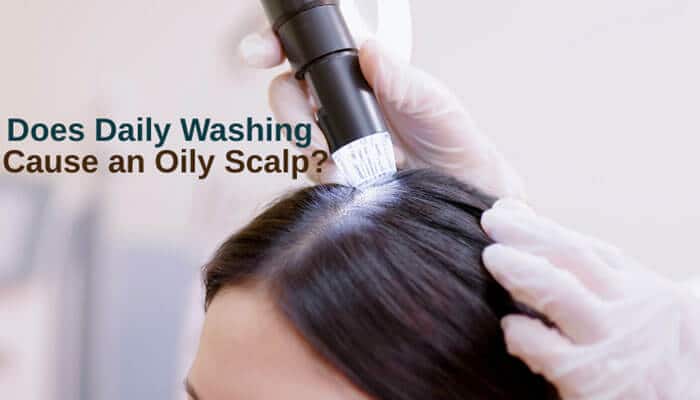
You may have heard that shampooing every day “trains” your scalp to produce more oil. The relationship is not that simple.
Sebum production is influenced by biological factors, including hormones and age. Washing removes oil that is already present; it does not provide a simple switch that permanently teaches your scalp to become oily.
Rather than trying to “train” your scalp according to a fixed internet schedule, adjust washing based on actual oil, sweat, buildup, and comfort.
Is It Bad to Wash Your Hair Everyday With Shampoo?
The type of shampoo can matter as much as frequency. A product that works well once a week may feel too harsh when used every morning. If you need frequent cleansing, look for a shampoo suited to your scalp and hair type.
A useful routine is simple:
- Wet your hair thoroughly.
- Apply a small amount of shampoo mainly to your scalp.
- Massage gently rather than scratching with your nails.
- Rinse thoroughly.
- Apply conditioner according to your hair type.
- Detangle gently.
- Avoid excessive heat when drying.
The AAD recommends concentrating shampoo on the scalp rather than washing the entire length aggressively. This removes excess oil, dead skin, and product buildup while helping avoid unnecessary drying of the hair.
Should You Condition Your Hair Every Time You Wash It?
For most people, conditioner is an important part of the routine. Conditioner can improve manageability and reduce tangling. The AAD recommends conditioning after washing. People with fine or straight hair can focus conditioner toward the ends, while those with dry or curly hair may benefit from applying it throughout the length.
If Is It Bad to Wash Your Hair Everyday is a concern because your hair feels dry, improving your conditioning routine may help.
What About Dandruff?
Dandruff changes the conversation. Some people assume a flaky scalp always means it is too dry and therefore stop washing. That can sometimes make the problem worse.
Mayo Clinic recommends more frequent washing with a gentle shampoo as an initial approach for mild dandruff because cleansing helps remove excess oil and dead skin. If regular shampoo does not work, medicated dandruff shampoo may be needed.
Common anti-dandruff shampoo ingredients include:
- Ketoconazole
- Selenium sulfide
- Salicylic acid
- Pyrithione zinc
- Coal tar
Different products have different instructions, so follow the label rather than assuming every medicated shampoo should be used daily. Mayo Clinic notes that some people use dandruff shampoo two or three times weekly, while people with curly, coiled, or textured hair may use it less often.
Persistent dandruff, redness, inflammation, or severe itching deserves professional assessment.
Is Dry Shampoo a Replacement for Washing?
No. Dry shampoo can temporarily absorb visible oil, but it does not clean the scalp in the same way as shampoo and water.
The AAD explains that dry shampoo is intended to help manage oil between washes, not replace regular washing. Excessive buildup may also contribute to scalp irritation and hair problems.
Think of dry shampoo as a styling or oil-control tool rather than a substitute for cleansing.
Signs You Are Washing Your Hair Too Much
Instead of counting shampoo days, pay attention to your hair.
Your washing schedule may be too frequent or too harsh when:
- Your hair constantly feels rough.
- Your ends become increasingly brittle.
- Your curls lose softness.
- Your scalp feels uncomfortable immediately after washing.
- Your hair becomes difficult to detangle.
- Breakage appears to increase.
Try changing one thing at a time. For example, switch to a gentler shampoo before completely changing your washing schedule.
Signs You May Not Be Washing Enough
The opposite problem also exists. You may need more frequent cleansing when you notice:
- Persistent greasy roots
- Heavy product buildup
- Unpleasant scalp odor
- Frequent itching
- Visible flakes
- Scalp discomfort
- Hair that feels coated or dirty
Cleveland Clinic notes that itching, redness, flaking, and dandruff can indicate that the scalp is not being cleansed frequently enough in some cases.
This is why the question Is It Bad to Wash Your Hair Everyday should not turn into “How long can I avoid shampoo?” Clean scalp and healthy-looking hair should be the goal.
How Age Can Change Your Washing Routine
Your ideal routine may change throughout your life. Younger people often experience greater oil production, while scalp oil production can decrease with age. Cleveland Clinic notes this age-related difference when discussing washing frequency.
That means a routine that worked when you were 18 may not be ideal when you are 40 or 60.
Season, hormones, activity, hairstyle, climate, and product use can also change what your scalp needs.
A Simple 7-Day Test to Find Your Ideal Routine
Still wondering Is It Bad to Wash Your Hair Everyday for your hair? Instead of copying someone else’s schedule, observe your own scalp for a week.
Track four things:
- Oil: When do your roots begin looking greasy?
- Comfort: When does your scalp begin itching or feeling uncomfortable?
- Hair texture: Does shampoo leave your lengths soft or dry?
- Lifestyle: Did exercise, swimming, heat, or styling products change your needs?
For example, if your scalp is greasy and uncomfortable within 24 hours but your lengths remain healthy with daily washing and conditioning, frequent washing may suit you.
If your scalp remains comfortable for several days while daily shampooing makes your ends dry and brittle, you probably do not need to wash every day.
This personalized approach is more useful than blindly following a universal washing rule.
Common Hair-Washing Mistakes to Avoid
Even the right washing frequency can cause problems when your technique is poor.
Avoid these common mistakes:
- Using very hot water
- Scratching the scalp aggressively
- Pouring large amounts of shampoo onto the lengths
- Skipping conditioner when your hair needs moisture
- Roughly rubbing wet hair with a towel
- Brushing tangled wet hair aggressively
- Using high heat every time you wash
- Allowing styling products and dry shampoo to build up for long periods
- Copying someone else’s routine despite having a completely different hair type
Good hair care is about the entire routine, not simply how many shampoo days appear on your calendar.
Final Verdict
So, Is It Bad to Wash Your Hair Everyday? For some people, no. For others, it may be unnecessary and can contribute to dryness or breakage when the hair is already dry or fragile.
An oily, fine, straight, or frequently sweaty scalp may benefit from daily or near-daily cleansing. Curly, coily, thick, dry, bleached, or chemically treated hair will often need a different schedule. What matters most is balancing scalp cleanliness with hair moisture and strength.
Instead of following a strict internet rule, watch what your own hair tells you. If your scalp becomes oily, itchy, sweaty, or covered with buildup, it probably needs cleansing. If your hair becomes rough and brittle after every wash, reconsider your products, technique, or frequency. That is the most useful answer to Is It Bad to Wash Your Hair Everyday: wash often enough to maintain a healthy scalp, but not so aggressively that your hair suffers.
Is It Bad to Wash Your Hair Everyday FAQs
1. Is It Bad to Wash Your Hair Everyday?
No, Is It Bad to Wash Your Hair Everyday does not have a universal “yes” answer. Daily washing may work well for people with oily, fine, straight, sweaty, or buildup-prone scalps. Dry, curly, coily, thick, or chemically treated hair often benefits from less frequent shampooing.
2. Can I wash my hair every day with just water?
Rinsing can remove some sweat and loose debris, but water alone does not perform the same cleansing role as shampoo. Whether you need shampoo every day depends on your scalp, activity, oil production, and hair type.
3. Is it better to wash hair every day or every other day?
Neither schedule is automatically better. If daily shampooing keeps your scalp comfortable without drying your hair, it may work well. If your hair stays clean and comfortable longer, every other day or less frequently may suit you better.
4. Does washing your hair every day make it grow faster?
Daily washing does not directly make hair grow faster. A clean, comfortable scalp is part of good hair care, but hair growth depends on many biological and health factors.
5. Should people with oily hair shampoo every day?
Some can. The AAD states that people with oily scalps and straight hair may want to shampoo daily.
6. Can I wash curly hair every day?
You can, but many people with curly or coily hair do not need daily shampooing. Frequent washing can leave already-dry lengths harder to manage, so the routine should be adjusted to scalp cleanliness and hair moisture needs.
7. How do I know if I am overwashing my hair?
Dryness, roughness, increased tangling, brittle ends, and worsening breakage can suggest that your washing routine or products are too harsh.
8. How do I know if I am not washing enough?
Greasy buildup, persistent itching, scalp odor, redness, or flaking can indicate that your scalp needs more frequent or more effective cleansing. Persistent symptoms should be assessed by a healthcare professional.
9. When Should You See a Dermatologist?
Most people can find a suitable washing schedule through simple observation and product changes. However, see a dermatologist or healthcare professional if you develop:
- Persistent or severe itching
- Significant scalp redness or inflammation
- Painful scalp bumps or sores
- Thick or persistent scaling
- Sudden or patchy hair loss
- Significant unexplained shedding
- Dandruff that does not improve with appropriate treatment
Mayo Clinic recommends seeking professional care when dandruff does not improve after regular use of dandruff shampoo.
