
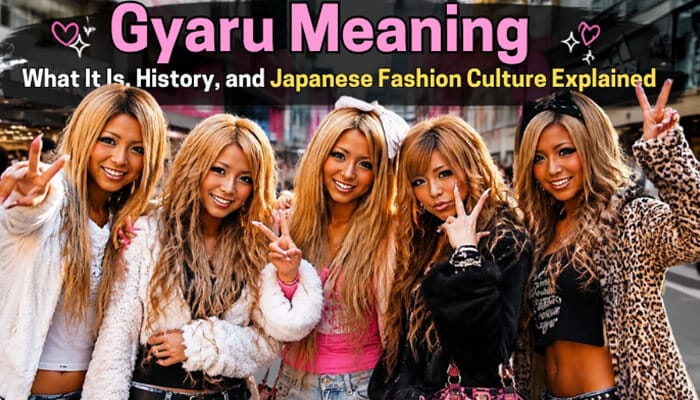

If you have ever seen photos of Japanese girls with dramatic eye makeup, big teased hair, tanned skin, and wild platform shoes and thought “what is that?” you have already stumbled into the world of gyaru. The gyaru meaning goes far deeper than a striking outfit or a beauty look. It is a whole identity, a whole attitude, and one of the most fascinating chapters in the story of Japanese youth culture. Once you understand what gyaru really is, you start to see why millions of young women around the world are falling in love with it all over again in 2026.
The word “gyaru” (ギャル) comes from the English slang word “gal,” which simply means girl. But in Japan, it became something much bigger than a label. When teenage girls in 1990s Tokyo started bleaching their hair, darkening their skin, and dressing in ways that broke every beauty rule Japan had ever set they were not just choosing an outfit. They were making a statement. Understanding the gyaru meaning means understanding a generation of young women who decided to live loudly, look boldly, and refuse to disappear into the background.
Today, gyaru is having a powerful revival. TikTok, Instagram, and a wave of Y2K nostalgia have introduced this Japanese fashion subculture to an entirely new generation not just in Japan, but in the US, South Korea, Europe, and Southeast Asia. Whether you are completely new to the topic or you have been curious for a while, this guide covers everything: the origin, the history, the key styles, the iconic substyles, and why gyaru still matters in 2026.
What Is Gyaru?
At its most basic level, the gyaru meaning refers to a Japanese fashion subculture built around bold self-expression, dramatic makeup, voluminous hair, glamorous outfits, and a rebellious attitude toward conventional beauty standards. It is not just one look it is a movement with dozens of variations, each with its own personality.
Gyaru is the Japanese pronunciation of the English word “gal.” In Japanese, there is no “L” sound, so “gal” becomes “gyaru.” The word began appearing in Japan in the 1970s, but it did not become a full fashion movement until the 1990s.
What makes gyaru different from just wearing trendy clothes is the mindset behind it. Being gyaru is about:
- Confidence: Owning your look without apology
- Individuality: Standing out rather than blending in
- Rebellion: Pushing back against strict beauty standards and social rules
- Community: Belonging to a group of like-minded people who celebrate expression
In Japan, the traditional ideal of feminine beauty involved pale skin, natural dark hair, minimal makeup, and a quiet, modest personality. Gyaru rejected all of that loudly.
The History of Gyaru: From the 1970s to Today
Understanding the gyaru meaning properly requires going back to where it all started. This was not a trend that appeared overnight. It grew slowly over decades, shaped by Japan’s economy, pop culture, and the desires of young women who wanted something different.
The 1970s–1980s: The Word Is Born
The word “gal” first appeared in Japanese media in the 1970s, used to describe energetic, outgoing young women. Fashion magazines like GAL’S LIFE (launched in 1978) introduced Western styles to Japanese readers. At this stage, “gal” was just a casual word not yet a subculture. During Japan’s economic bubble in the late 1980s, young women began wearing tight, body-conscious outfits called “bodycon” (body-conscious) fashion. This was the soil from which gyaru would eventually grow.
The Early 1990s: Kogyaru Is Born in Shibuya
When Japan’s economic bubble burst in the early 1990s, something unexpected happened. A new type of girl appeared on the streets of Shibuya Tokyo’s youth fashion hub. High school girls started shortening their school uniform skirts, wearing loose socks scrunched around their ankles, carrying luxury brand bags, and dyeing their hair light brown.
These girls were called kogyaru (short for “high school gal”). They came mostly from wealthy private schools, and their look was as much about attitude as clothing. They gathered around Shibuya 109, a fashion building that became the beating heart of the entire gyaru world.
The biggest celebrity influence at the time was Namie Amuro, a Japanese pop singer who embraced her naturally tanned Okinawan skin at a time when pale skin was the beauty ideal. Young women who copied her style were called “Amuraa.” She is widely considered the original gyaru icon.
The Mid-to-Late 1990s: Peak Gyaru
By the mid-1990s, gyaru had exploded into a full cultural phenomenon. Two things helped push it to national fame:
- Egg Magazine (launched 1995): This fashion magazine scouted real high school girls directly from Shibuya’s streets and made them the stars. It turned street trends into nationwide movements.
- Purikura (photo sticker booths): These became a signature part of gyaru social life the more sticker photos you had with friends, the more popular you were.
It was during this period that gyaru’s most extreme substyles emerged, including Ganguro a look defined by very dark artificial tans, stark white lipstick, bleached hair, and vibrant colors. Ganguro was a direct, almost aggressive rejection of Japan’s traditional pale-skin beauty standard.
The 2000s: Expansion and Substyles
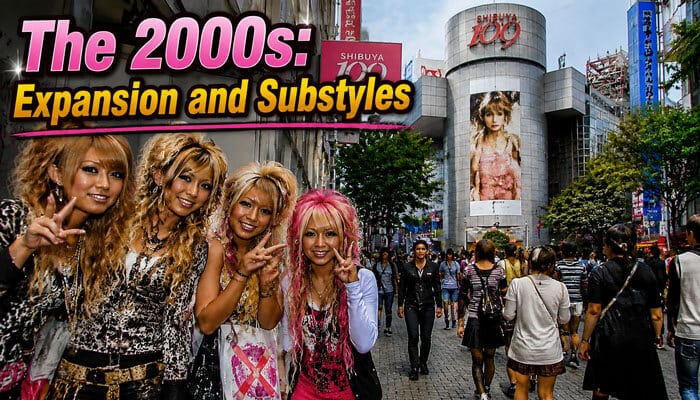
The early 2000s were gyaru’s golden age. The style had evolved into dozens of distinct substyles, each with its own personality, magazines, and brand loyalties. Shibuya 109 was the mecca an entire fashion building dedicated to the gyaru universe. The subculture spread beyond Tokyo and into mainstream Japanese pop culture.
The 2010s: Decline
As minimalist beauty trends grew in Japan and key gyaru magazines closed down (including Egg), the subculture lost mainstream momentum. Many gyaru moved toward softer, more natural styles. The loud, tanned, maximalist era faded from the spotlight but never fully disappeared.
2020s–2026: The Global Revival
Social media changed everything. TikTok and Instagram introduced gyaru to a new global audience. A wave of Y2K nostalgia brought early-2000s fashion back into style. Gen Z discovered gyaru through archived photos, makeup tutorials, and transformation videos and fell in love with its boldness. Today, in 2026, gyaru is experiencing a genuine revival, now called Reiwa Gyaru, that is more inclusive, more wearable, and more global than ever before.
Gyaru Meaning in Fashion: What Does the Look Actually Involve?
The gyaru meaning in terms of style is built on three major pillars: makeup, hair, and clothing. These three elements work together to create the instantly recognizable gyaru look.
Gyaru Makeup
Makeup is the most important part of the gyaru look. The goal is to dramatically enlarge and define the eyes, creating a bold, wide-eyed appearance that stands out immediately. Key elements include:
- Heavy false eyelashes (both top and bottom)
- Dramatic eyeliner, often extended outward
- Bright eyeshadow and under-eye highlight
- Tanned or bronzed skin (in classic styles)
- Light, glossy lips to balance the dramatic eyes
- Circle lenses to make eyes appear larger
Gyaru Hair
Hair in gyaru fashion is never subtle. Big, voluminous, and styled to perfection, gyaru hair is a statement on its own:
- Hair is typically dyed in light shades blonde, light brown, honey, or caramel
- Extensions and wigs are commonly used for extra length and volume
- Curls, waves, and teased styles are preferred
- Hair accessories like bows, ribbons, and clips are essential
Gyaru Clothing
Gyaru outfits are figure-flattering, trend-conscious, and always designed to turn heads:
- Short skirts and mini dresses
- Crop tops and bodycon styles
- Platform shoes and boots
- Animal prints, pastels, and bold patterns
- Layered accessories jewelry, bags, decorated nails
The Major Gyaru Substyles Explained
One of the most fascinating parts of the gyaru meaning is that it is not one single style it is a family of many distinct substyles. Here is a clear breakdown:
| Substyle | Key Features | Vibe |
| Kogyaru | School uniform remixed short skirts, loose socks, dyed hair | Playful, youthful rebellion |
| Ganguro | Deep artificial tan, white eye and lip makeup, bleached hair | Extreme, provocative, rule-breaking |
| Yamanba | Even more extreme than Ganguro face stickers, bright colors | Wild, theatrical, shocking |
| Hime Gyaru | Princess aesthetic lace dresses, tiaras, curly hair, bows | Feminine, royal, ultra-glamorous |
| Agejo | Nightlife glamor bodycon dresses, dramatic curls, hostess-inspired | Seductive, luxurious, bold |
| Rokku Gyaru | Rock-inspired dark tones, edgy accessories, leather | Edgy, powerful, alternative |
| Onee Gyaru | More mature, refined version of gyaru | Sophisticated, elegant, polished |
| B-Kei (B-Gal) | Hip-hop and R&B influenced casual street style | Relaxed, cool, urban |
| Reiwa Gyaru | Modern era softer, more inclusive, social media friendly | Confident, wearable, global |
Each substyle carries the same core gyaru spirit confidence, boldness, individuality but expresses it in a completely different way.
Gyaru vs. Ganguro: What Is the Difference?
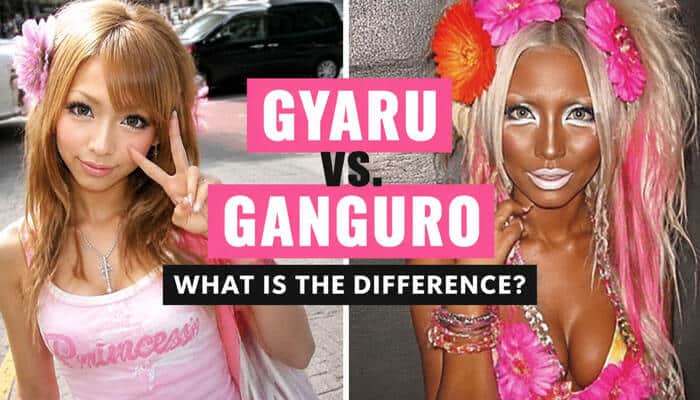
This is one of the most common points of confusion. A lot of people think ganguro and gyaru are the same thing they are not.
Gyaru is the broad, overall subculture. Think of it as the umbrella.
Ganguro is one specific substyle within gyaru, known for its extreme tanning and high-contrast makeup. All ganguro girls are gyaru, but not all gyaru girls are ganguro.
The same logic applies to other substyles like Hime Gyaru or Agejo they are all part of the larger gyaru family.
Gyaru vs. Lolita Fashion: Another Common Confusion
Another pair of styles that often get mixed up are gyaru and Lolita fashion. While both are iconic Japanese fashion subcultures, they are very different in spirit.
| Gyaru | Lolita Fashion | |
| Core Vibe | Bold, sexy, rebellious | Doll-like, modest, Victorian |
| Makeup | Heavy, dramatic, enlarging | Natural, soft, doll-like |
| Skin | Tanned or bronzed (classic) | Pale, porcelain |
| Clothing | Short skirts, crop tops, bodycon | Full skirts, petticoats, covered-up |
| Attitude | Outgoing, social, loud | Reserved, elegant, refined |
They both celebrate individuality but in very different ways.
Gyaru Culture: More Than Just Clothes
The gyaru meaning is not complete without understanding the lifestyle that surrounds it. Gyaru was never just a fashion choice it was a whole way of living.
- Gal Circles: Groups of gyaru girls who socialized together, went to clubs, attended events, and supported each other. These were the social backbone of the community.
- Para Para Dancing: A synchronized hand-and-arm dance style set to Eurobeat music a signature part of 1990s–2000s gyaru nightlife.
- Purikura: Arcade photo sticker booths where gyaru girls documented their looks and friendships.
- Gyaru-go: A unique slang language developed within the subculture, used to communicate with other gyaru.
- Egg Magazine: The bible of gyaru fashion a publication that shaped every trend, discovered new icons, and gave the subculture its visual identity.
Gyaru’s Cultural Meaning: A Fashion Rebellion
Perhaps the most important part of truly understanding gyaru meaning is recognizing what it stood for socially. In Japan, women were long expected to be quiet, modest, pale-skinned, and obedient the ideal of the “good woman.” Gyaru said no to all of that.
By tanning their skin deliberately, dyeing their hair blonde, wearing short skirts, and being loud and social, gyaru girls were actively defying Japan’s traditional gender expectations. It was a form of quiet protest expressed through fashion. They were not trying to look Western for the sake of it they were refusing the narrow beauty standards their own culture had imposed on them.
This is why scholars and cultural commentators take gyaru seriously as a social movement, not just a fashion trend. It was young women using their appearance as a language and saying something meaningful with it.
Gyaru Meaning in 2026: The Modern Revival
The gyaru revival happening right now in 2026 is real, significant, and global. Here is what is driving it:
- TikTok and Instagram have made gyaru makeup tutorials, transformation videos, and outfit styling accessible to millions of people worldwide
- Y2K nostalgia has brought early-2000s fashion back into the spotlight and gyaru was one of the defining aesthetics of that era
- Gen Z’s love of maximalism is pushing back against the minimalist “clean girl” aesthetic and gyaru is the ultimate maximalist choice
- The “gyaru mind” movement emphasizes that gyaru is now more about mindset (confidence, boldness, self-expression) than following strict style rules
- International communities called “gaijin gyaru” have grown across the US, Europe, and Southeast Asia, bringing their own cultural interpretations
The modern version, called Reiwa Gyaru, is softer and more inclusive. It welcomes different skin tones, body types, and personal aesthetics. You do not have to tan your skin or wear a specific brand to be gyaru in 2026 you just have to carry the spirit.
How to Start with Gyaru Fashion (Beginner-Friendly Tips)
Interested in trying gyaru? Here is how to get started without feeling overwhelmed:
- Pick one substyle that feels right for your personality: Hime Gyaru and Kogyaru are good starting points for beginners
- Start with the eyes: Gyaru makeup is defined by dramatic eye looks; master the lashes and eyeliner first
- Focus on hair: Voluminous curls or waves with a light hair color immediately read as gyaru
- Add key clothing pieces: Short skirts, platform shoes, and statement accessories
- Build gradually: You do not need a completely new wardrobe on day one
- Join the community: Online gyaru groups on TikTok, Instagram, and Discord are welcoming and full of helpful guides
Why Gyaru Still Matters
The gyaru meaning is as relevant today as it was in 1995. At its core, gyaru has always been about one thing: the freedom to be yourself, loudly and unapologetically. In a world that constantly tells people especially women to tone it down, fit in, and be less, gyaru says the opposite.
It started as a fashion rebellion in the streets of Shibuya. It grew into a global subculture. It faded, and then it came back stronger and more inclusive than ever. That kind of staying power does not come from trends it comes from meaning.
Whether you wear the look or just appreciate the culture, understanding gyaru gives you a richer picture of how fashion can be a form of resistance, identity, and community all at once.
Gyaru Meaning FAQs
1. What does gyaru mean in Japanese?
Gyaru (ギャル) is the Japanese pronunciation of the English word “gal,” meaning girl. In Japan, the gyaru meaning evolved to represent a bold fashion subculture defined by dramatic makeup, dyed hair, tanned skin, and a rebellious attitude toward traditional beauty standards.
2. Is gyaru still a thing in 2026?
Yes. Gyaru is experiencing a strong global revival in 2026, driven by TikTok, Y2K nostalgia, and a new generation of fans. The modern version is called Reiwa Gyaru and is more inclusive and wearable than classic styles.
3. What is the difference between gyaru and Lolita fashion?
Gyaru is bold, sexy, and rebellious focused on dramatic makeup and figure-flattering clothes. Lolita fashion is modest, doll-like, and Victorian-inspired. They are very different subcultures despite both being iconic in Japanese fashion.
4. What are the most popular gyaru substyles?
The most well-known substyles include Kogyaru, Ganguro, Hime Gyaru, Agejo, Yamanba, Rokku Gyaru, Onee Gyaru, and Reiwa Gyaru.
5. Is gyaru only for Japanese people?
No. The global gyaru community sometimes called “gaijin gyaru” welcomes fans from all cultural backgrounds who respect and appreciate the subculture’s Japanese origins.
